


 Назад
Назад 

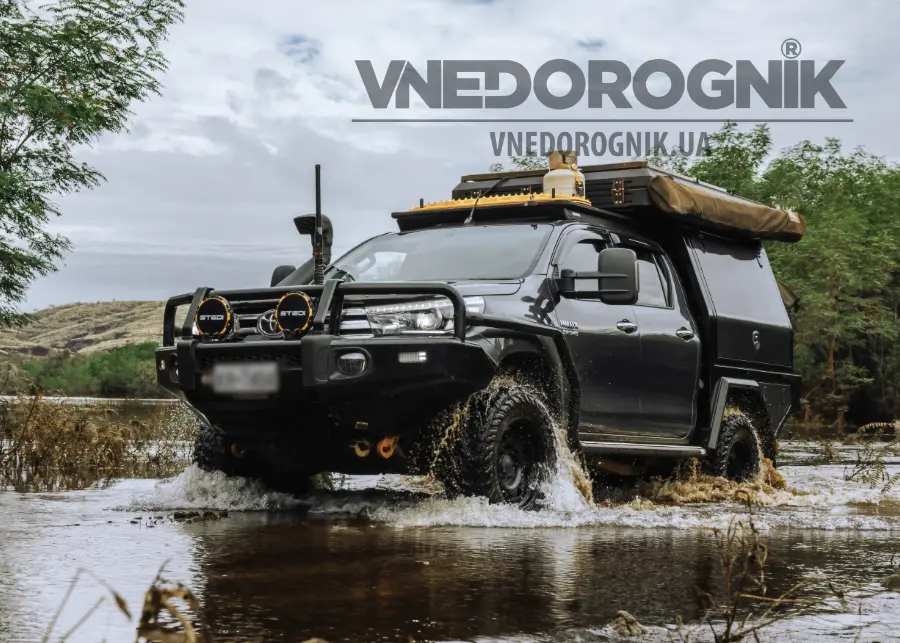
Легендарний пікап, основоположник середньорозмірних пікапів, найнадійніша машина у світі, безсмертна Тойота - яку тільки назву не давали цим автомобілям у всьому світі. І насправді більшість з цього - правда! Ці, на перший погляд непомітні, пікапи можна купити на всіх континентах і їх ви зустрінете в найбільш складнопрохідних та сурових місцях нашої планети.
Hilux перевозять вантажі у джунглях Латинської Америки, пустелях Африки, горах Гімалаї та в умовах Австралійського Аутбеку. І немаловажливий момент - вони виконують роботу до кінця, працюючи там, де конкуренти ламаються чи виходять з ладу.
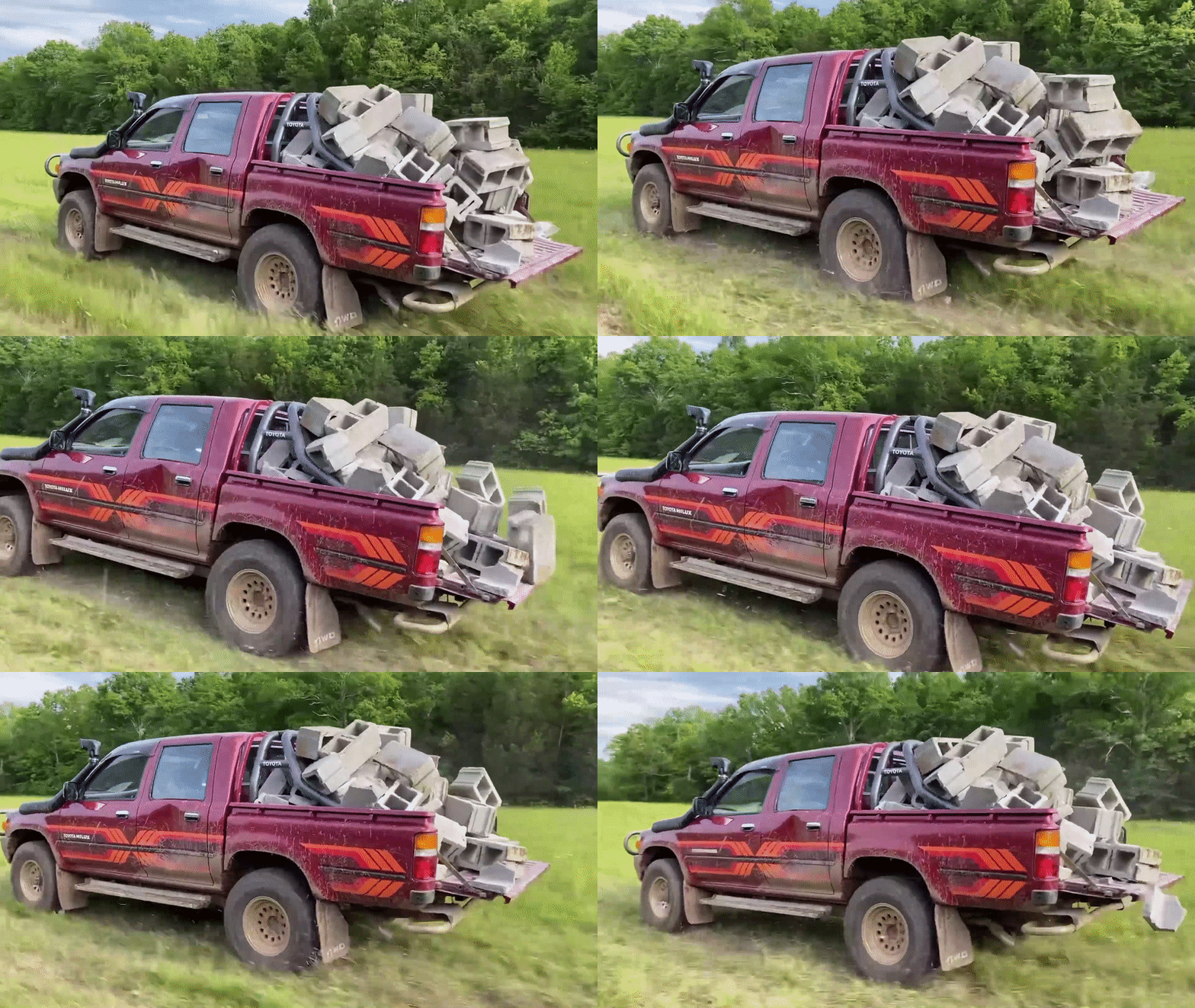
Що ж, давайте дізнаємось з чого все почалося, які нововведення вводили до пікапів Хайлюкс протягом 8 поколінь і чого нам очікувати від наступного легендарного пікапа Тойота.
Зміст:
- 1-ше покоління (1968-1972)
- 2-ге покоління (1972-1978)
- 3-тє покоління (1978-1983)
- 4-те покоління (1983-1988)
- 5-те покоління (1988-1997)
- 6-е покоління (1997-2004)
- 7-е покоління (2004-2015)
- 8-е покоління (2015+)
- 9-те покоління
1-ше покоління (1968-1972)
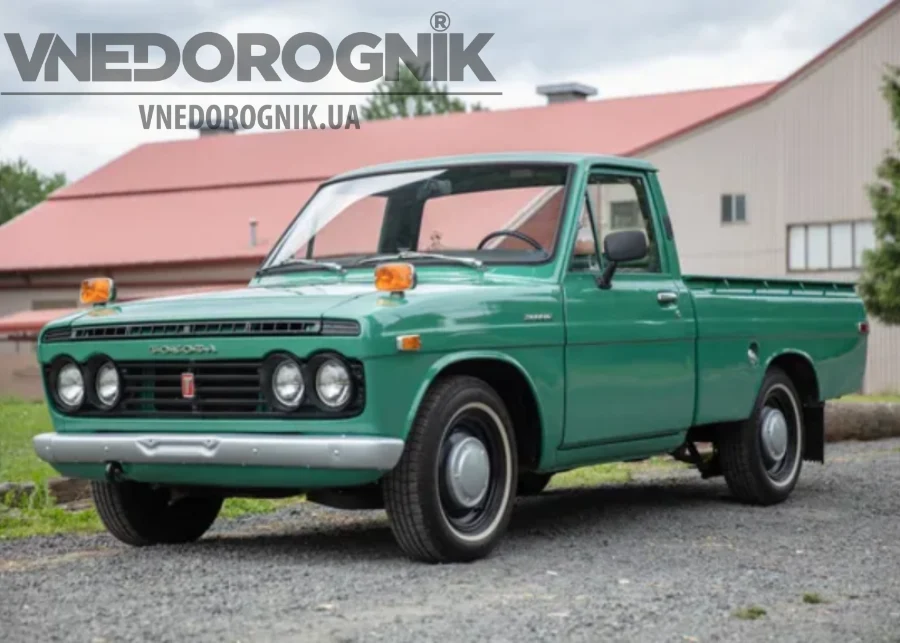
Hilux (назва якого походить від слів "високий" і "розкішний") дебютував у березні 1968 року як новий капотний пікап, який став наступником Briska і Light Stout. Автомобіль був розроблений компанією Toyota, а виробляла його компанія Hino Motors, Ltd. на своєму заводі в Хамурі.
Двигун - 1,5-літровий 70-сильний агрегат (2R), який також використовувався на Toyota Ace. Hilux отримав роздільну рамну конструкцію з передньою підвіскою на подвійних поперечних важелях і жорсткою задньою підвіскою на ресорах. Трансмісія - 4-ступінчаста механічна з колонкою перемикання передач. Hilux вміщував трьох пасажирів і мав вантажопідйомність 1 000 кг, а довжина вантажного кузова становила 1 850 мм.
2-ге покоління (1972-1978)
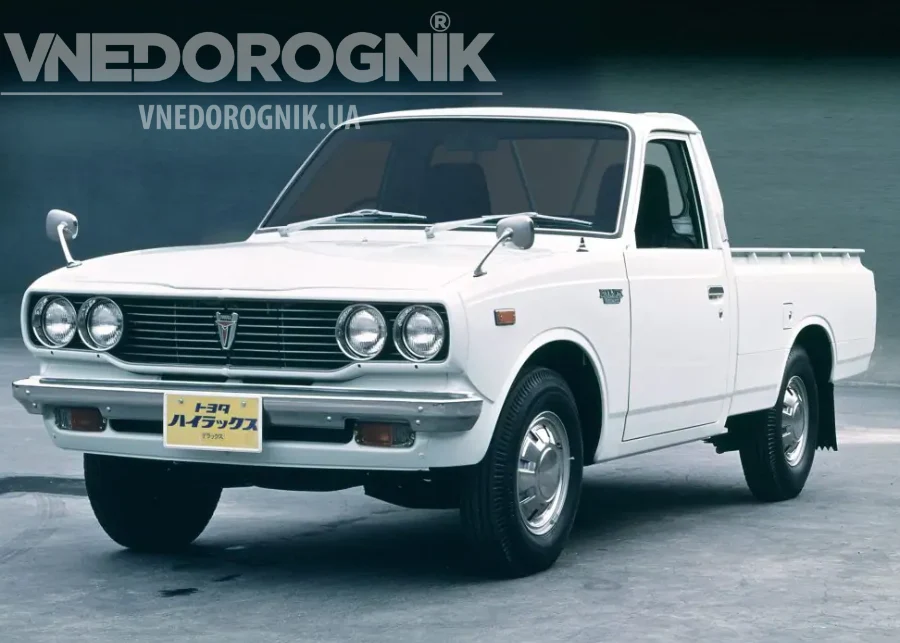
Друге покоління Hilux з'явилося на ринку в травні 1972 року. Як довгобазові, так і короткобазові версії успадкували механічні компоненти попередників, хоча й отримали подовжену колісну базу на 10 мм і 45 мм відповідно. Довжина кузова і максимальна вантажопідйомність залишилися незмінними.
На додаток до стандартної моделі з існуючим 1,6-літровим двигуном, з'явилася модель Highway з 2,0-літровим 105-сильним двигуном (18R) для більш комфортного руху по швидкісних автомагістралях.
3-тє покоління (1978-1983)
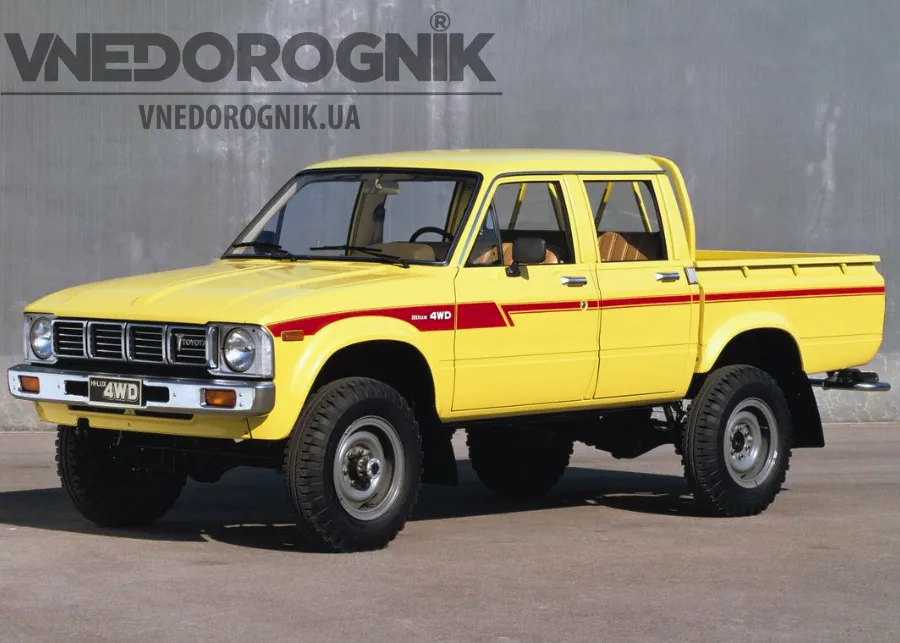
Третє покоління Hilux надійшло у продаж у вересні 1978 року. Нова модель пропонувала схожі на седан технічні характеристики та оснащення, а також підвищений комфорт водіння. Серед варіацій були три моделі стандартної довжини та чотири моделі з довгим кузовом.
Нова топова модель Super Deluxe мала подовжену кабіну, яка була на 90 мм довшою за стандартну, що збільшувало внутрішній простір. 1,6-літровий двигун 12R-J був успадкований від попереднього покоління. Двохважельна передня підвіска залишилася без змін, за винятком того, що пружини були замінені на торсіонну балку. Передні дискові гальма стали стандартним обладнанням на моделях класу Deluxe і вище.
4-те покоління (1983-1988)
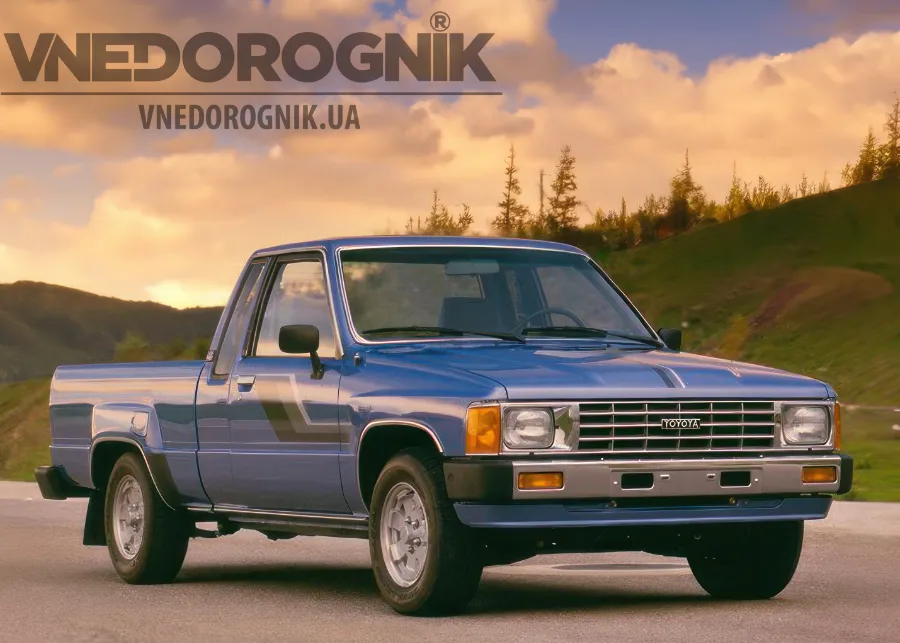
Четверте покоління Hilux було випущено в листопаді 1983 року. Задньопривідні (RWD) моделі включали серії Comfortable та Popular; перша з них була моделлю 4 покоління з оновленим дизайном інтер'єру та екстер'єру, а друга - моделлю 3 генерації, яка залишилась у виробництві. Всі повнопривідні моделі (4WD) отримали новий кузов. Зовнішній вигляд моделей четвертого покоління характеризувався наявністю блістерних крил спереду і позаду.
5-те покоління (1988-1997)
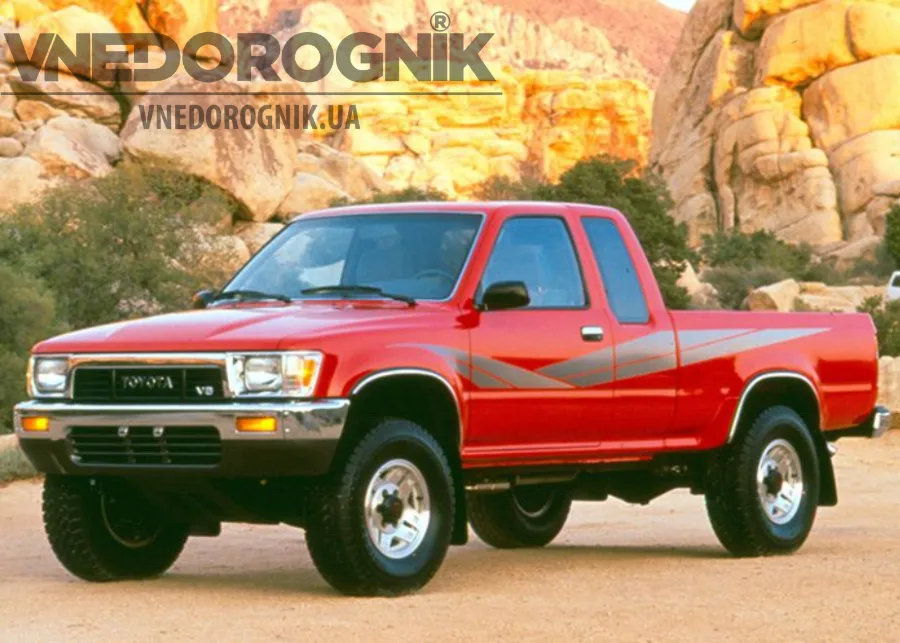
Hilux п'ятої генерації, що з'явився у вересні 1988 року, уособлював три основні концепції: потужність, міцність та комфорт. Щоб покращити його функціональність у якості багатоцільового транспортного засобу (відомого в Японії як RV або автомобіль для відпочинку), внутрішнє оснащення було додатково модернізовано. Базові варіанти кузова були зведені до одного з штампованими дверима та інтегрованими віконними рамами.
Основною відмінністю між задньопривідними (RWD) і повнопривідними (4WD) моделями були розширювачі колісних арок: Моделі RWD мали крила без розширювачів, тоді як моделі 4WD мали розширювачі крил. З цієї причини ширина моделей 4WD стала 1 690 мм, або на 40 мм ширше, ніж у моделей RWD. Дизайн панелі приладів та інших елементів інтер'єру став ще більш схожим на седан аніж раніше.
6-е покоління (1997-2004)
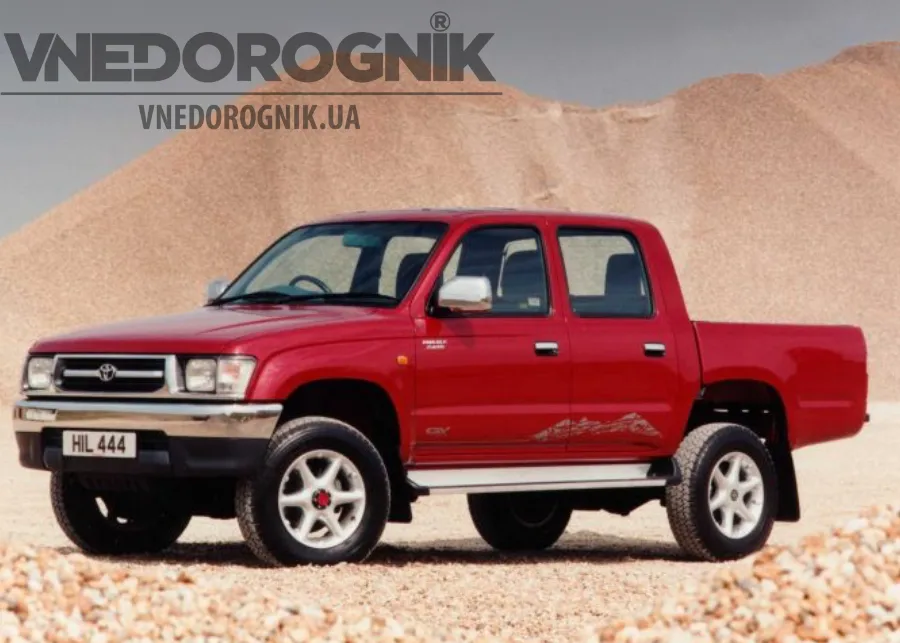
Шосте покоління Hilux, яке було представлено у вересні 1997 року, складалося з лінійки пікапів для бізнесу та спортивних пікапів для особистого користування. Останній був оснащений обладнанням та пристроями, придатними для багатоцільового автомобіля, зі збільшеною висотою та довжиною кабіни, а також підвищеною шумоізоляцією.
Модель з додатковим рядом сидінь, представлена в листопаді зі збільшеною на 100 мм шириною кузова, була відкритим багатоцільовим автомобілем з достатньо довгим вантажним бортом і двома допоміжними сидіннями в задній частині салону (подвійна кабіна).
7-е покоління (2004-2015)
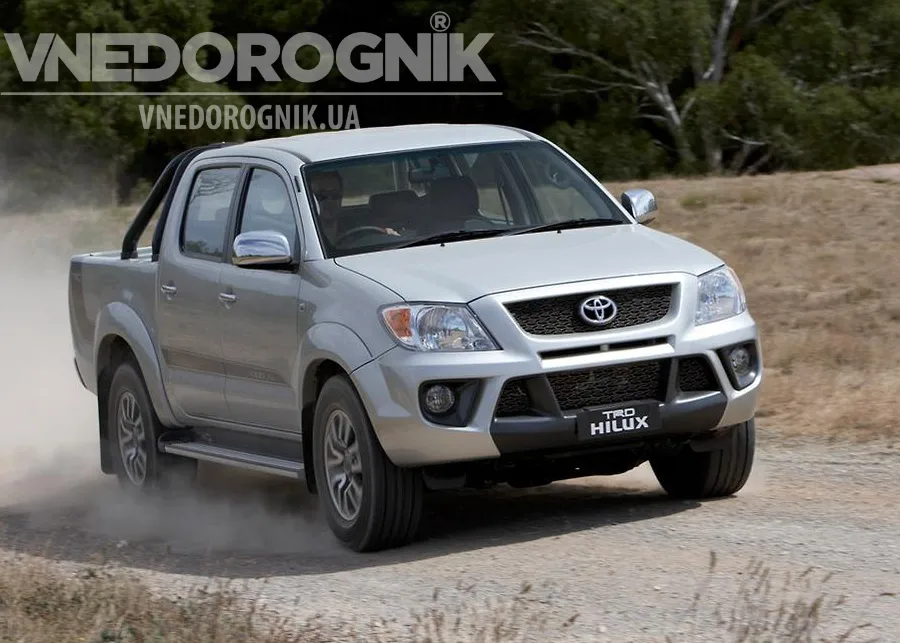
Сьоме покоління Hilux було представлено в серпні 2004 року як новий пікап для продажу в більш ніж 140 країнах світу. Успадкувавши суворий дизайн від моделі шостого покоління, він запропонував клієнтам 21-го століття високий рівень надійності та комфорту, який вони шукали, з великим внутрішнім простором, а також комфортом їзди як у легковому автомобілі та зручністю як у позашляховику.
В рамках проекту "Інноваційний міжнародний багатоцільовий автомобіль" (IMV) Toyota розробила п'ять нових моделей на єдиній платформі - три моделі пікапів (Hilux), один мінівен (Innova) та один спортивний позашляховик (Fortuner).
Щоб забезпечити своїх клієнтів у всьому світі привабливими продуктами за більш доступною ціною, які випускаються в один і той же час, компанія також налагодила оптимальні процеси виробництва та постачання в глобальному масштабі.
Сьоме покоління Hilux було першим, яке не виробляється в Японії. Більшість автомобілів почало збиратись в Таїланді, Південній Африці та Аргентині для доставки в країни своїх регіонів, а також в Малайзії, Пакистані та Венесуелі.
8-е покоління (2015 - по теперішній час)
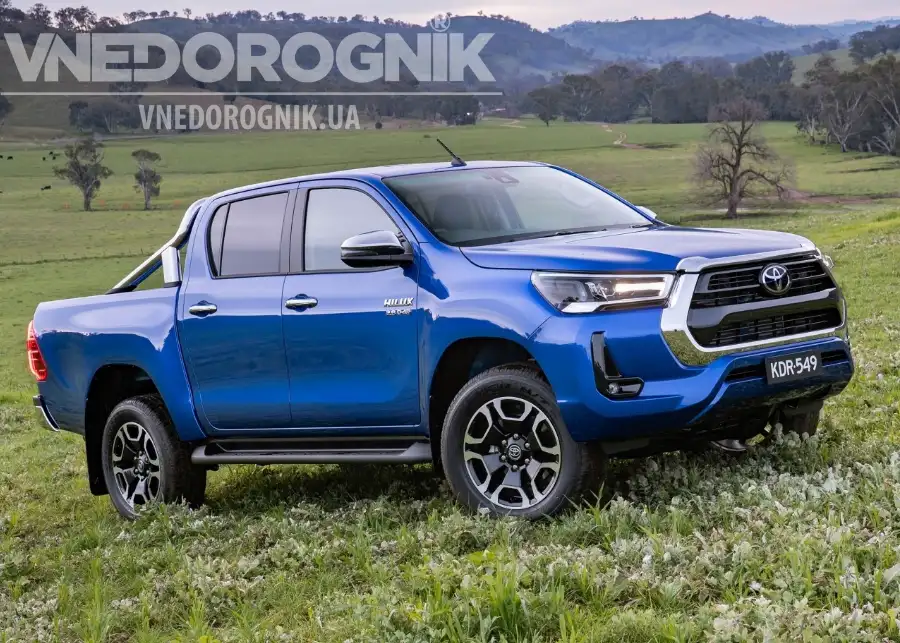
Восьме покоління Hilux було представлено у травні 2015 року. Щоб по-справжньому зрозуміти, чого очікують клієнти і з якими проблемами вони стикаються щодня, команди розробників об'їхали весь світ, отримуючи прямі відгуки від клієнтів і подорожуючи різноманітними дорогами, щоб відчути реальні умови експлуатації.
Вся концепція розробки Hilux восьмого покоління була зосереджена на "переосмисленні міцності" з метою зробити новий Hilux "витривалішим" на основі набагато ширшого тлумачення цього слова. Восьме покоління Hilux стало не тільки міцнішим, але й максимально зменшило навантаження на водія під час водіння.
Виходячи за рамки традиційних уявлень про міцність, він може похвалитися комфортом їзди, який робить довгі поїздки менш виснажливими, тихим салоном, який дозволяє спілкуватися в будь-яких умовах, і збільшеним запасом ходу завдяки підвищеній паливній ефективності. На нього також можна було покластися у досягненні легендарної витривалості, продуктивності, реакції та безпеки, яких очікували від цієї моделі.
9-те покоління (???)
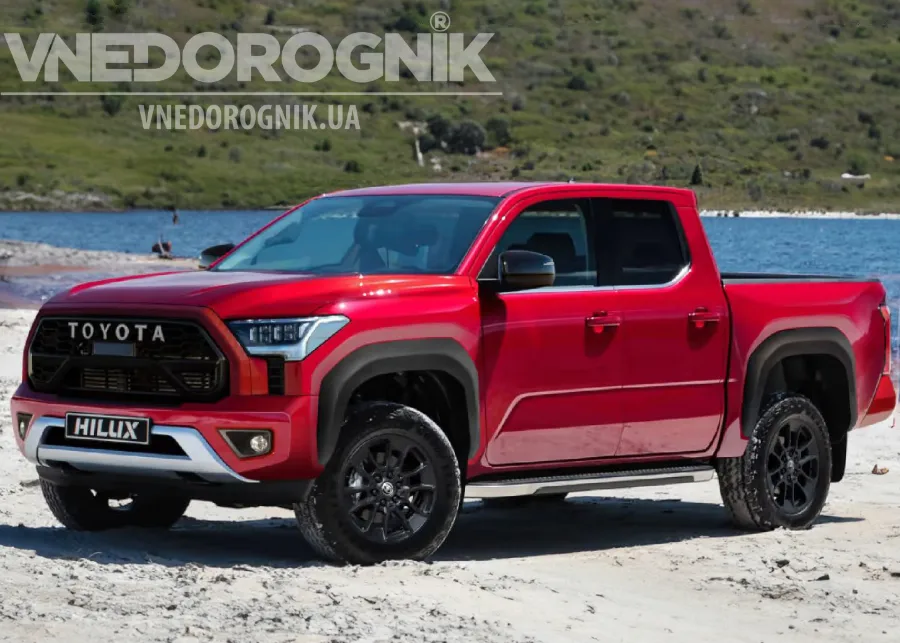
Інформація про майбутнє, 9 покоління Toyota Hilux є лише чутками наразі. Проте, за передбаченнями, нова модель може отримати більш сучасний екстер'єр і має бути ще більш стійкою на бездоріжжі.
Також очікується, що вона отримає значні покращення в технологіях безпеки та зміну лінійки двигунів на більш потужні та ефективні (як це відбувається в новому Lexus GX та Toyota Land Cruiser 300). Офіційна інформація про нову модель поки що не оприлюднена, тому залишається чекати на оголошення від Toyota.


 395
395
 3хв
3хв 


