


 Назад
Назад 

Чільною функцією трансмісії є передача обертання від мотора на провідні колеса і регулювання передавального числа. Стандартна трансмісія включає редуктор, КПП, а також карданну передачу.
При русі по прямій такої системи досить - обертання коліс здійснюється в одному швидкісному діапазоні. Але при виконанні стилів, колеса рухаються по різних радіусах, проходячи різні відстані. Відповідно, частина з них може буксувати. Також цей ефект підвищує навантаження на складові трансмісії, збільшує ризик пошкодження елементів приводу.
Щоб цього не виникло, в систему трансмісії додається диференційний вузол. Якщо говорити простою мовою, як працює диференціал, то він уповільнює внутрішні колеса і прискорює зовнішні. Таким чином виключається пробуксовка і інші негативні наслідки цього ефекту.
Основні різновиди диференціальних вузлів
Диференціали класифікуються на 2 види, виходячи з місця монтажу:
- міжколісні;
- міжосьові.
Перший тип застосовується на транспортних засобах, що мають одну провідну вісь. На машинах з заднім приводом диференціал монтується на редуктор. На транспорті з переднім приводом диференціал підключається безпосередньо до КПП.
Міжосьовим диференціалом комплектується тільки повнопривідний транспорт. Він забезпечує оптимальний розподіл обертання між осями при переміщенні по дорозі з нерівною поверхнею. На повнопривідних автомобілях зазвичай використовується комбінація з різних диференціальних вузлів.
Особливості функціонування вузла
Диференціали роблять на базі планетарного редуктора. Вони складаються з шестернею провідного і веденого типів, сателітів і корпусу.
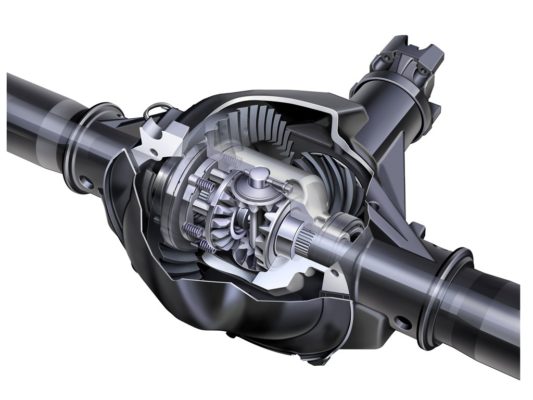
Ведені шестерні бувають з однаковим або різним кількістю зубів. Перші називаються симетричними, за рахунок пропорційного розподілу обертання між валами. Другі (асиметричні) виконують розподіл за заданим значенням.
Симетричні шестерінки встановлюють на міжколісні диференціали, асиметричні - на міжосьові.
Принцип роботи диференціала:
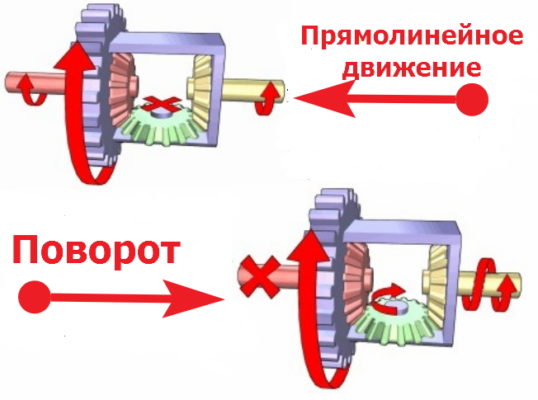
- На прямій траєкторії руху всі колеса отримують ідентичне опір від дороги. Обертання від КПП подається на головне колесо редуктора. Паралельно з ним крутиться корпус диференціального вузла. Сателіти передають крутний момент на шестірні керованого типу в ідентичному співвідношенні, залишаючись нерухомими по відношенню до власних осях.
- Під час провертання внутрішні колеса піддаються більшому опору. Через це ведена шестерня сповільнюється, а сателіти починають обертатися на осях. Рух сателітів сприяє зростанню швидкості обертання зовнішнього колеса.
Завдяки диференціалу, загальний крутний момент не змінюється, а рівномірно розподіляється між колесами.
Блокування диференціала
Диференціал має істотний недолік. Якщо опір на якомусь колесі пропадає, то відбувається різкий стрибок кутової швидкості. В результаті обертання подається тільки на це колесо. Через це відбувається зупинка другого колеса. Як підсумок - машина обездвіжівается.
Для усунення цієї проблеми, необхідно уповільнити пробуксовує колесо. Для цього і використовується блокування.
Як працює блокування диференціала? Повна передбачає жорстке з'єднання корпусу диференціала і однією з піввісь. Диференціал просто не може крутитися швидше редукторною шестерні. За рахунок цього виключається перерозподіл обертання.
У системах з частковою блокуванням обмежуються зусилля, які можуть передаватися між вузлами.
Управління блокуванням
Блокування активно використовується на міжосьових і міжколісних диференціалом. Вона може активуватися в автоматичному, або ж ручному режимі.
Ручна блокування диференціала - як працює? Вона задіюється тільки в міру необхідності. Водій самостійно вибирає, коли включати привід, в результаті чого забезпечується жорстка зчіпка елементів диференціального вузла між собою.
Блокувальні приводи класифікуються на електромеханічні і механізовані, а також пневматичні і гідравлічні.
Ручне управління передбачає дотримання певних правил, знання того, як працює блокування міжосьового диференціала. Якщо забути відключити блокування диференціала і продовжити рух при хорошому зчепленні обох коліс з дорожнім покриттям, є ризик пошкодження трансмісії.
Автоматичні диференціали
Системи цього типу називають самоблокувальними. Вони відрізняються тим, що тут блокування здійснюється без безпосередньої участі водія.
Як працює диференціал? Найпростіше рішення передбачає наявність пакета дисків. Одні диски жорстко з'єднуються з корпусом диференціала, інші - з віссю. Також вони щільно притиснуті між собою.
У нормальному режимі пакет дисків обертається разом з диференціалом. При зростанні кутової швидкості, частина дисків починають обертатися швидше. Але за рахунок тертя, приріст кутової швидкості сповільнюється.
У електронного блокування міжосьового диференціала принцип роботи схожий. Тільки тут замість дисків використовується АБС. Якщо на одному з коліс збільшується кутова швидкість, гальмівна система автоматичні уповільнює його.




 514
514
 1хв
1хв 


