


 Назад
Назад 

Зміст:
- Для чого потрібні пружини?
- Що таке ступінь стиснення пружини?
- Популярні форми пружин
- Переваги спіральних пружин
- Недоліки гвинтових пружин
- Коли міняти пружини?
- Які пружини вибрати?
Пружини вашого автомобіля мають вирішальне значення для безпечного керування та комфортності поїздок. Вони підтримують постійну висоту і забезпечують пружність для поглинання нерівностей дороги. Пружина не тільки тримає автомобіль і підтримує кліренс на дорозі. Вона також визначає як машина реагуватиме на перешкоди. Виробники пружин проектують їх так, щоб кузов не просідав надто сильно під час перевезення вантажів або пасажирів. А якщо потрібно перевозити більше вантажу в автомобілі, можна купити посилені пружини, які виготовляються практично для всіх машин.
Всі елементи підвіски, такі як важелі, тяги, стабілізатори, кульові опори і сайлентблоки, існують тільки для того, щоб пружина могла виконувати свою роботу: компенсувати нерівності дороги, щоб колесо завжди залишалося в контакті з дорогою.
Для чого потрібні пружини?

Гвинтові або спіральні пружини виконані із загартованої сталі, навитої у формі спіралі. Більшість сучасних легкових автомобілів мають ці елементи підвіски на передній осі, а досить багато пікапів і позашляховиків - на всіх чотирьох колесах. Якщо на вашому автомобілі встановлено підвіску зі стійками типу McPherson, пружина проходить навколо амортизатора, і обидва елементи кріпляться до стійки. Якщо у вашому автомобілі немає стійок, то спіральні пружини та амортизатори кріпляться окремо.
Що таке ступінь стиснення пружини?
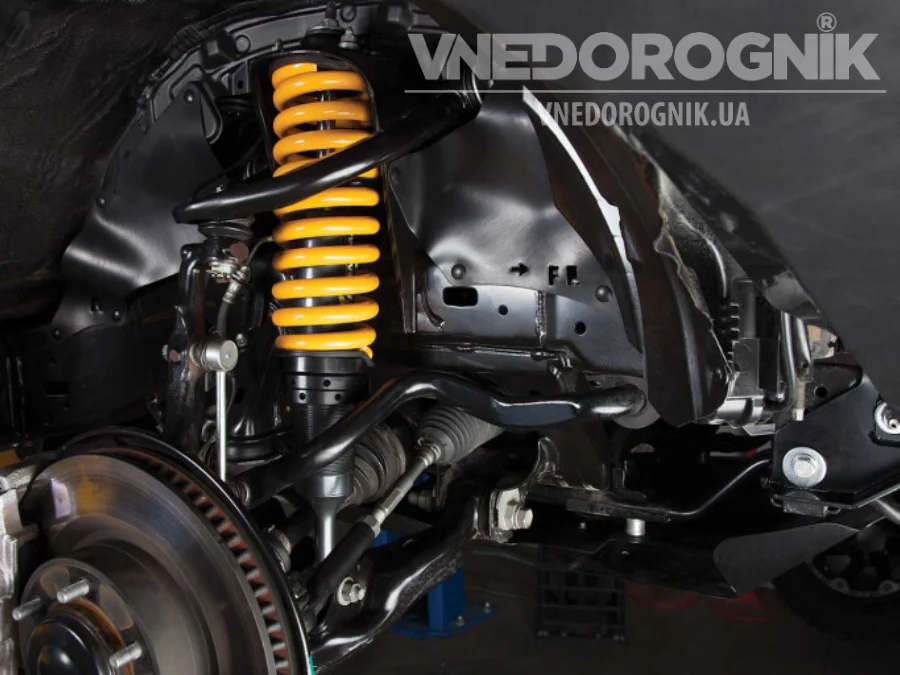
Головний параметр – це жорсткість. Чим вища жорсткість пружини, тим більше сили потрібно докласти для того, щоб її стиснути. На цю характеристику впливають інші параметри, серед яких зовнішній діаметр і висота, форма, крок витка, діаметр дроту, кількість витків і характеристики матеріалу. Жорсткість також залежить від діаметра прутів: більш товсті прути роблять пружину жорсткішою.
Довжина пружини - це її ненапружена довжина, і чим вона більша, тим вища жорсткість.
В одній і тій самій пружині крок витків (відстань між витками) може бути постійною або змінною. Короткі витки добре поглинають дрібні нерівності дороги, в той час як довгі витки підтримують жорсткість і керованість підвіски.
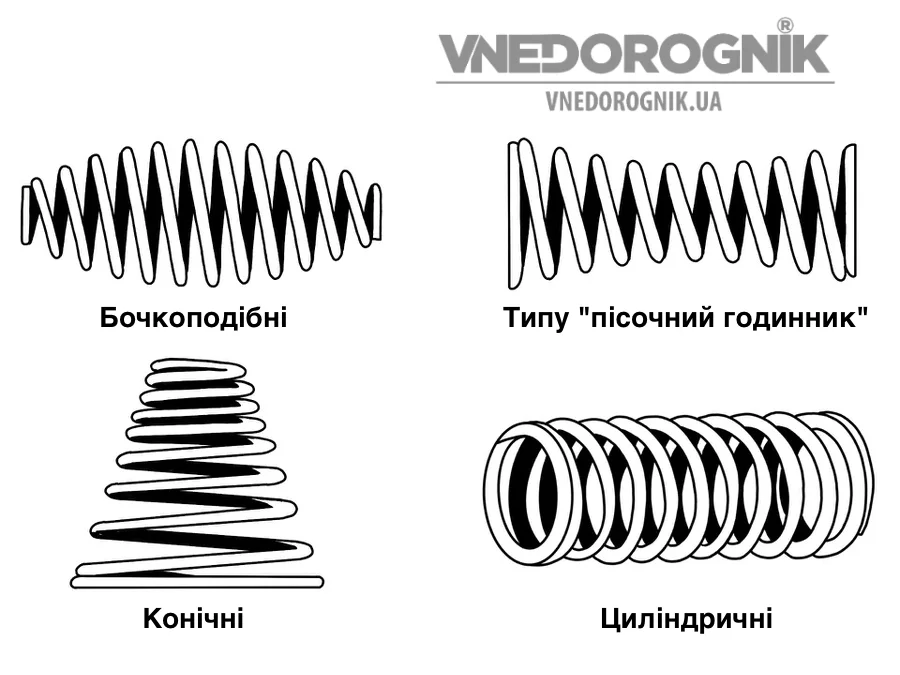
Популярні форми пружин:
- Бочкоподібні: Мають опуклу зовнішню та увігнуту внутрішню поверхню для збільшення вантажопідйомності. Оскільки жорсткість змінюється нерівномірно, такі пружини добре адаптуються до навантаження.
- Пружини типу "пісочний годинник": Унікальна форма з вузькою центральною частиною та ширшими кінцями забезпечує підвищену гнучкість і стійкість до перегинів в умовах високого навантаження.
- Конічні: Мають витки зі змінним кроком, які під час стискання не мають контакту між собою та характеризуються більшим ходом, прогресивнішим опором стисненню та підвищеною вантажопідйомністю.
- Зазвичайні (циліндричні): Це циліндричні пружини з однаковим діаметром і кроком. Витки однакового діаметра стикаються один з одним під час повного стиснення і чинять лінійний опір.
Переваги спіральних пружин:
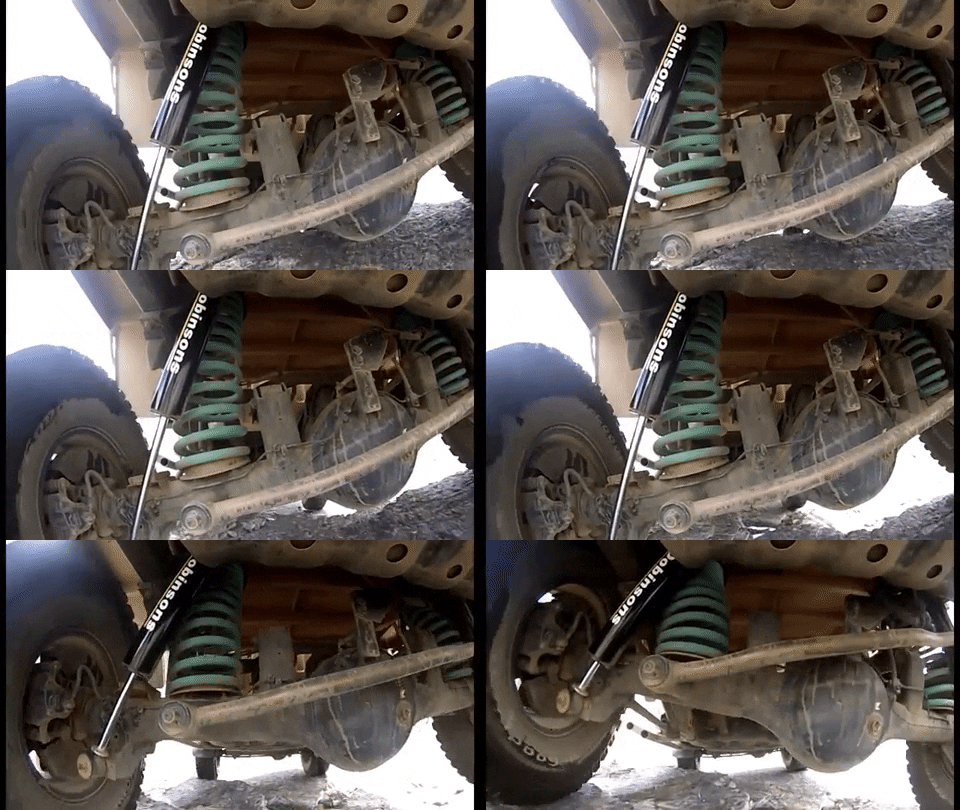
Використовують гвинтові пружини підвіски, що забезпечують найбільшу універсальність в різних умовах. Вони дають змогу домогтися комфортної їзди для незавантажених автомобілів і стають жорсткішими у разі збільшення ваги, підвищуючи стійкість без підстрибування та запобігаючи значному зменшенню кліренсу.
Для спортивних автомобілів з низьким кліренсом, спіральні пружини краще гасять нерівності під час звичайної вуличної їзди та стають жорсткішими на поворотах, зменшуючи крени кузова при агресивному водінні. Для позашляховиків пружинна підвіска дозволяє збільшити хід підвіски на пересіченій місцевості та отримувати контакт із поверхнею навіть у найскладнішому рельєфі.
Недоліки гвинтових пружин:
Якщо порівняти їх з ресорами, то пружини не настільки добре переносять великі навантаження. Вага машини концентрується на меншій площі поверхні, в той час як листові ресори розподіляють навантаження рівномірно.
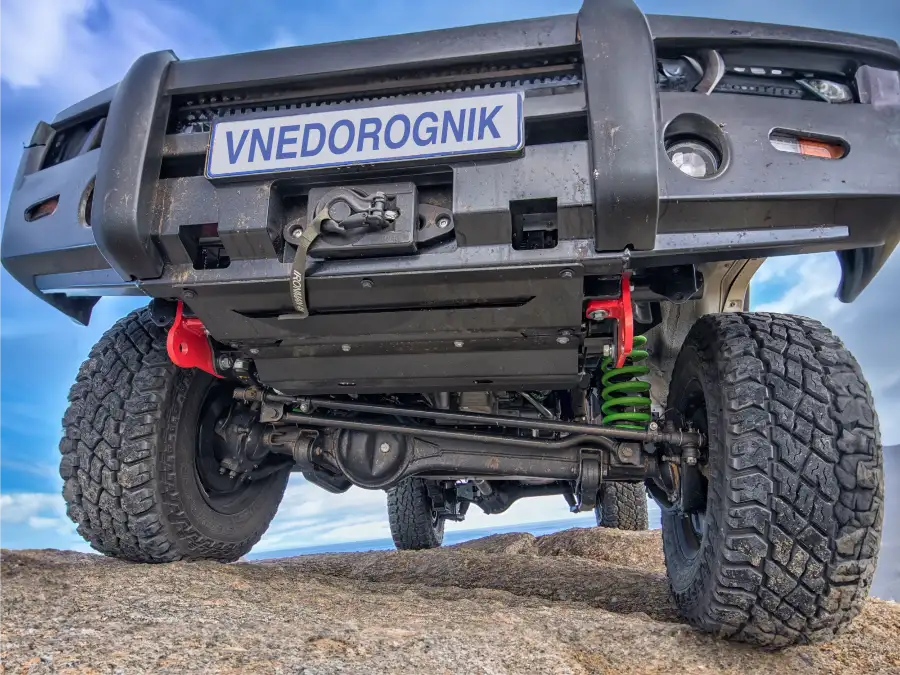
Для економії ваги, деякі виробники роблять пружини більш тонкими і легкими, але таке полегшення сильніше піддає просіданню і руйнуванню під тиском, особливо якщо з'являється корозія. Деякі виробники пружин, такі як Ironman або OME, наносять на пружини міцне покриття, що покликане запобігти появі іржі та проколу шин осколками.
Коли міняти пружини?

З часом кручені пружини зношуються і починають просідати, внаслідок чого кліренс автомобіля зменшується. Також пружина може бути зламана, якщо висота підвіски помітно відрізняється з лівого і правого боку автомобіля. Ці проблеми стають більш очевидними, коли ви додаєте навіть невелику вагу, наприклад, одного або двох пасажирів на задньому сидінні. Зламані пружини також можуть виробляти помітний гуркіт і призвести до пошкодження інших деталей. Їх слід негайно міняти щоб не “потрапити” на більш дорогий ремонт.
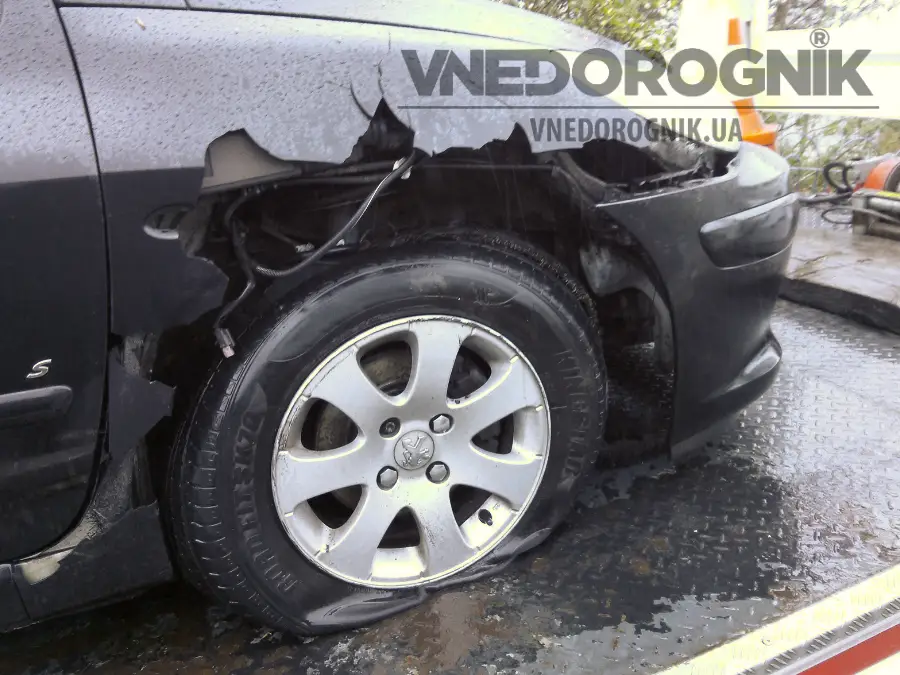
Пружини часто використовуються в автомобілях з багатоважільною підвіскою, тому якщо висота підвіски порушена, це може вплинути на розвал-сходження коліс і знос шин. Щоб перевірити чи не занадто низька у вас висота підвіски, ви можете знайти технічні характеристики в інструкції з експлуатації або в Інтернеті та порівняти їх зі своїми власними вимірами.
Які пружини вибрати?
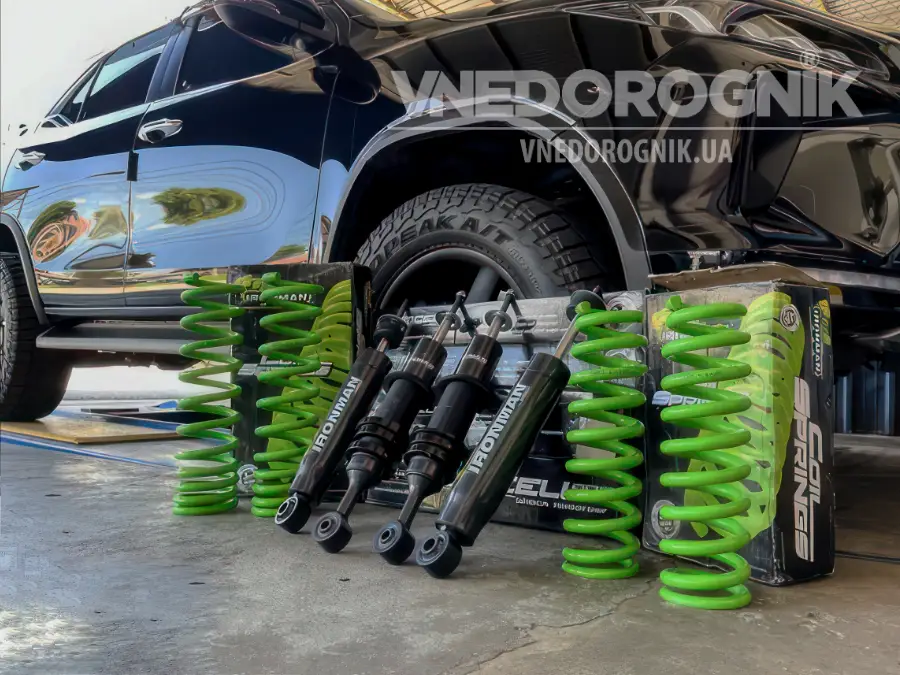
Якщо вам потрібно просто замінити деталь що вийшла з ладу, і в підвісці вас все влаштовує, то краще вибрати оригінальну пружину (слід міняти пружини попарно, щоб не піддавати більш швидкому зносу нову пружину разом зі зношеною з іншого боку осі).
Якщо ж ви хочете поліпшити характеристики підвіски, у нас є посилені пружини від найкращих світових виробників, призначені для цього. Ми також пропонуємо комплекти для ліфту підвіски, проставки та комплекти для вирівнювання позашляховиків і пікапів (які піднімають передню частину автомобіля більше ніж задню щоб вирівняти автомобіль відносно поверхні).





 540
540
 6хв
6хв 


