


 Назад
Назад 

Зміст статті:
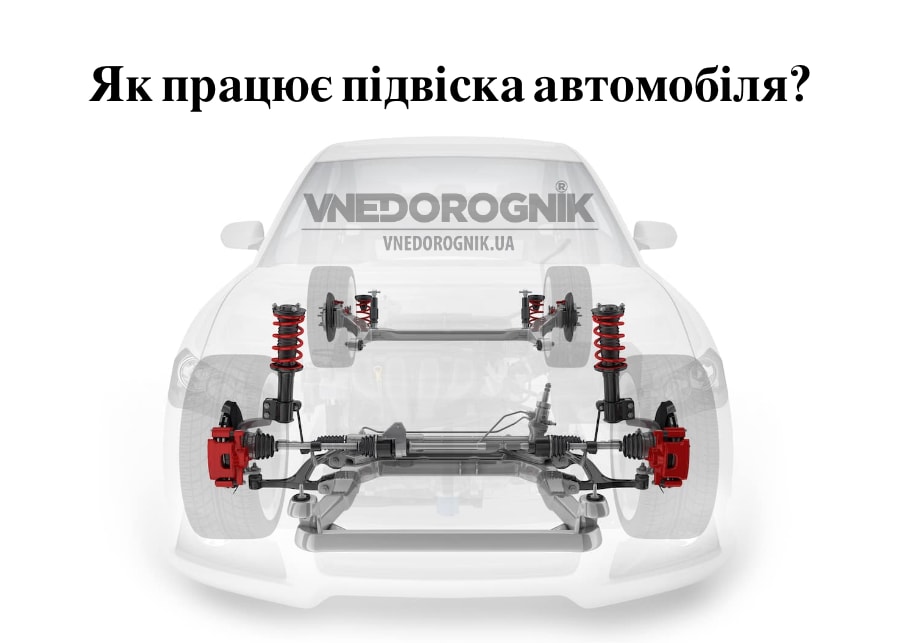
Що таке ходова частина автомобіля
Більшість водіїв згадують про ходову частину лише тоді, коли вона починає стукати на ямах. Проте підвіска автомобіля — це фундаментальна система, яка відповідає не лише за те, наскільки м'яко ви проїжджаєте «лежачого поліцейського». Вона забезпечує стабільність кузова, керованість на високих швидкостях та артикуляцію мостов на суворому бездоріжжі.
У цьому експертному матеріалі від Vnedorognik ми детально розберемо, як влаштована ходова, які існують види систем підвіски та що обрати для побудови надійного експедиційного чи спортивного позашляховика.
Як працює підвіска
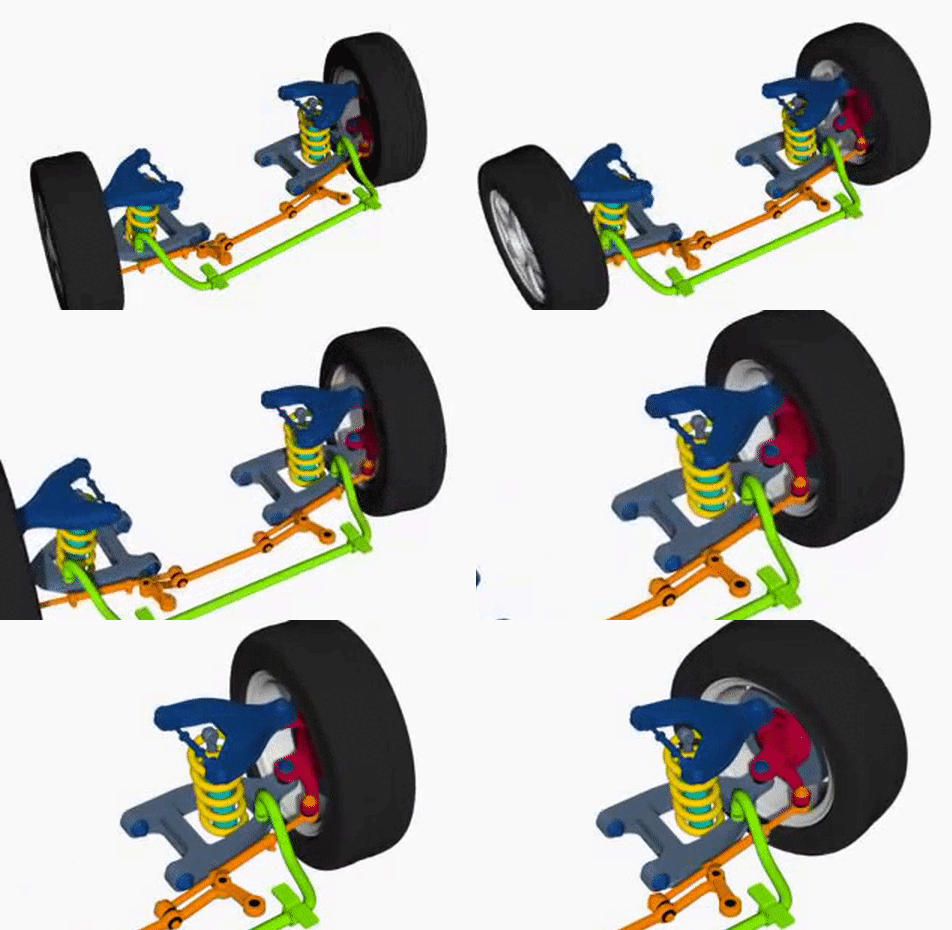
В основі роботи будь-якої підвіски лежить закон збереження і перетворення енергії. Коли колесо стикається з перешкодою (камінь, вибоїна), виникає потужна кінетична енергія удару. Якби колесо було жорстко прикручене до кузова, цей удар зруйнував би раму і завдав би травм пасажирам.
Натомість пружний елемент (pружина, ресора) стискається, приймаючи удар на себе. Але стиснута пружина прагне різко розтиснутися, що викликало б неконтрольоване розгойдування. Саме тут вмикається амортизатор — він працює як демпфер, перетворюючи механічні коливання пружини на теплову енергію завдяки гідравлічному опору масла (або газу).
Які функції підвіски
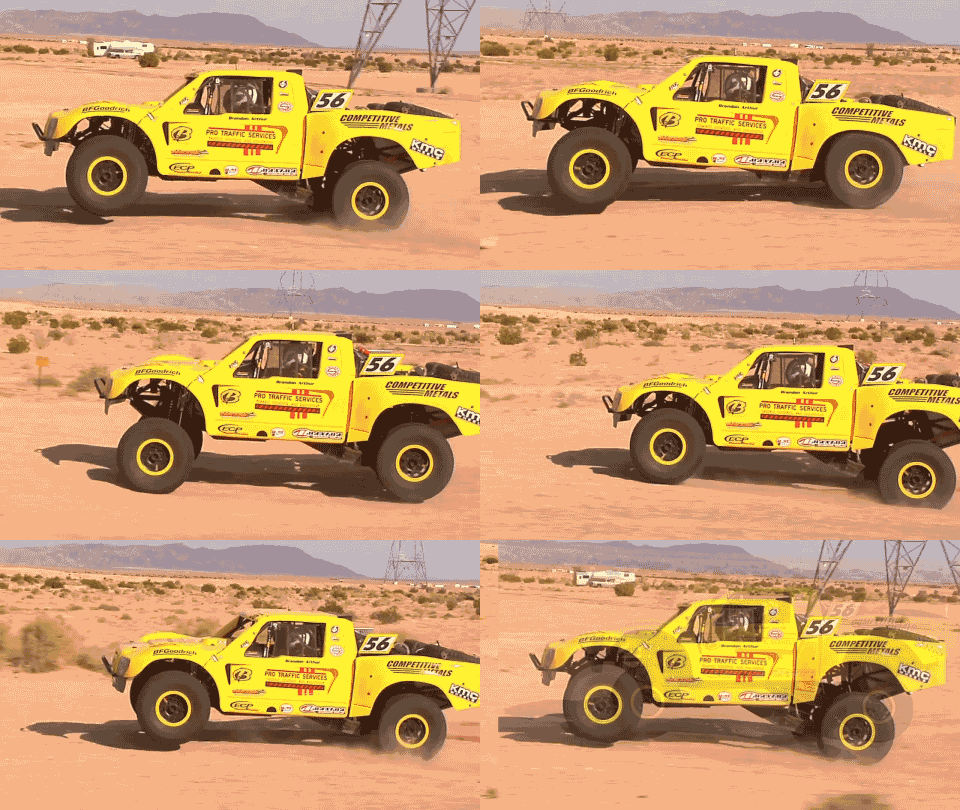
- Гасіння вібрацій: нейтралізація ударів від ям, каміння та нерівностей рельєфу.
- Контакт з дорогою: забезпечення постійного зчеплення шин з покриттям для безпечного гальмування та маневрування.
- Стабільність кузова: мінімізація кренів у поворотах та «клювків» під час різкого гальмування.
- Комфорт: захист пасажирів від тряски та вібрацій.
- Захист вузлів: суттєве зниження навантажень на раму, двигун та інші агрегати автомобіля.
З яких елементів складається підвіска?
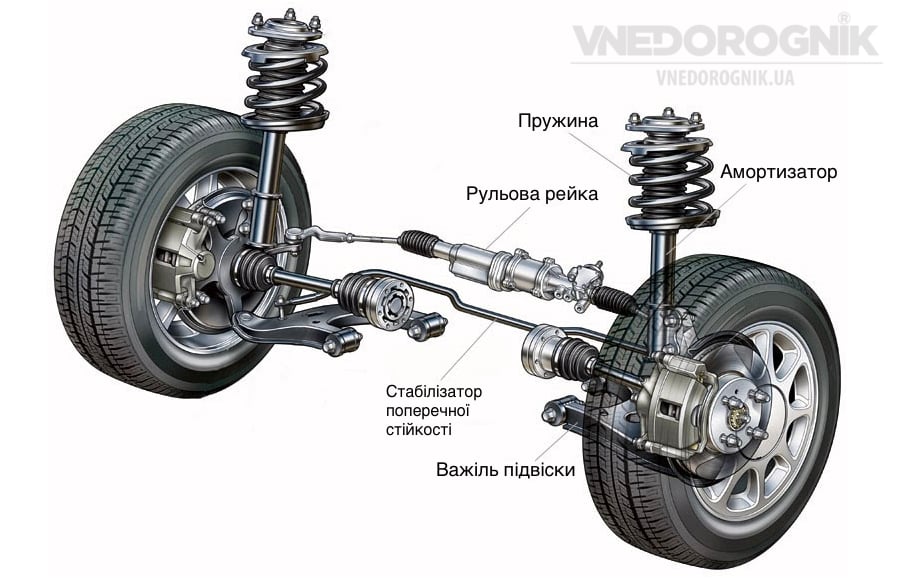
Сучасна підвіска — це комплексний механізм, що складається з трьох ключових груп елементів:
- Пружні елементи: гвинтові пружини, листові ресори або pneumatic балони. Вони утримують вагу авто і приймають на себе перші удари дороги.
- Демпфуючі елементи (Амортизатори): гасять коливання пружних елементів, не даючи кузову розгойдуватися.
- Направляючі деталі (Важелі та стабілізатори): задають траєкторію руху колеса відносно кузова та обмежують крен у поворотах.
Основні види підвісок: переваги та недоліки
1. Ресорна (класика для вантажів)
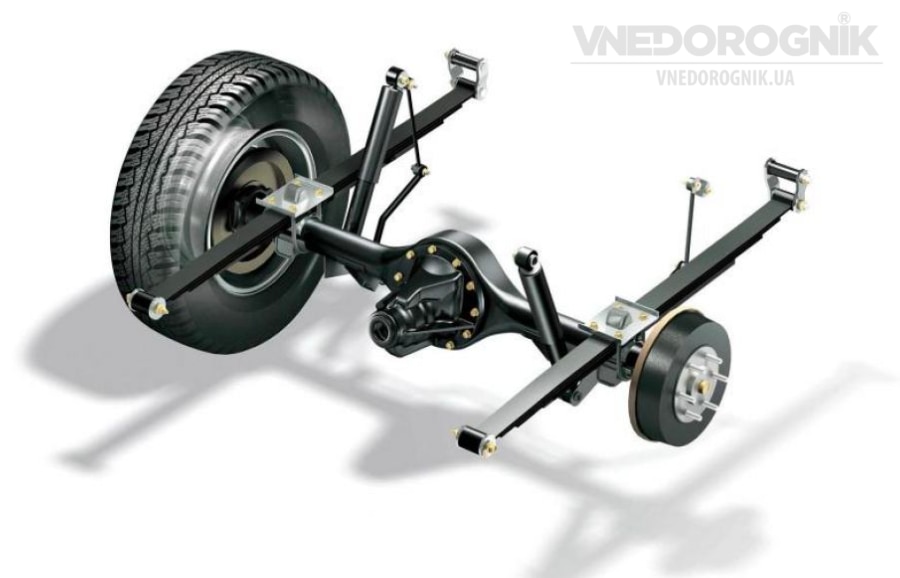
Це класична схема, де роль пружного елемента виконують пакети сталевих листів.
Переваги: Феноменальна витривалість та вантажопідйомність.
Застосування: Ідеально підходить для пікапів, комерційних авто та важких причепів.
2. Торсіонна (простота і надійність)
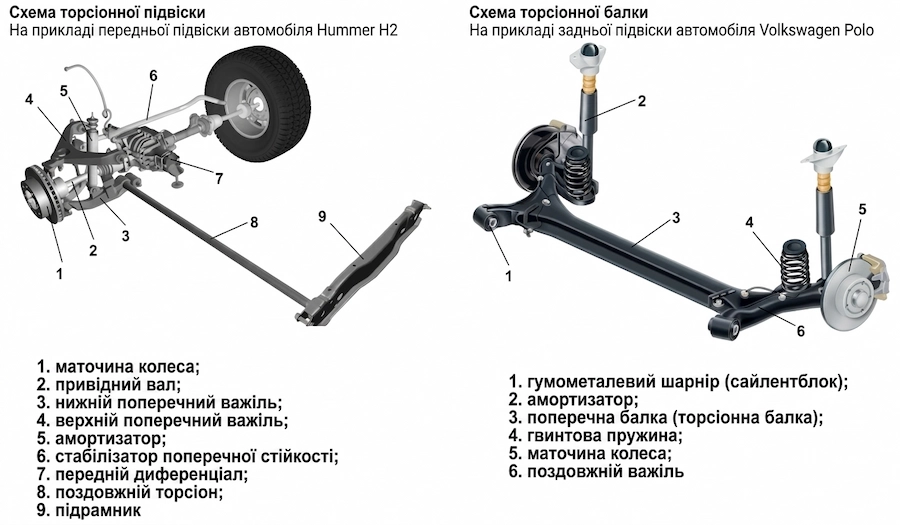
Замість пружин використовуються сталеві стрижні, що працюють на скручування.
Переваги: Компактність, надійність та можливість регулювання кліренсу «накручуванням» торсіонів.
Застосування: Бюджетні авто та позашляховики минулих поколінь.
3. Залежна підвіска / Нерозрізний міст (король оффроуду)
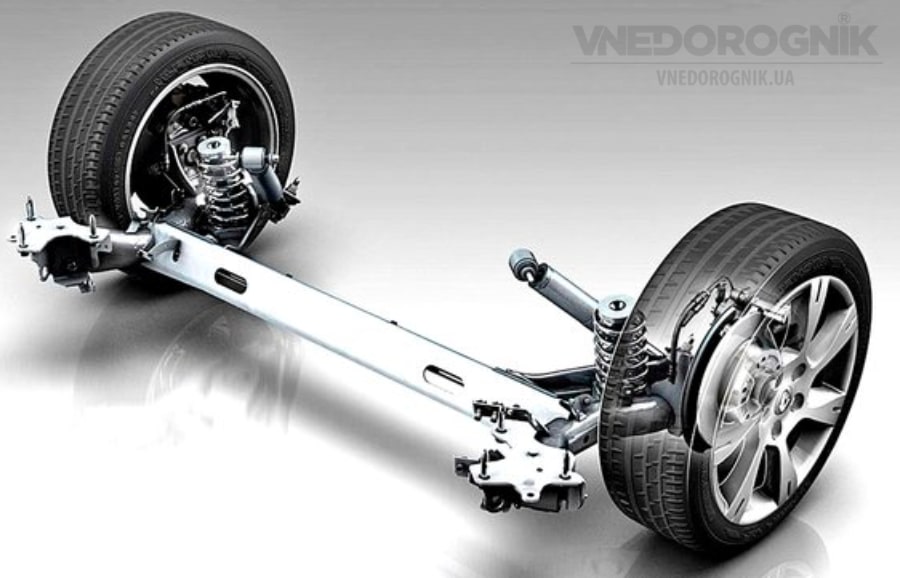
Колеса однієї осі жорстко зв'язані суцільною балкою.
Переваги: Максимальна міцність та величезні ходи підвіски, що критично важливо для подолання складних рельєфів.
Застосування: Хардкорні позашляховики та вантажівки.
4. Підвіска Макферсон (MacPherson)
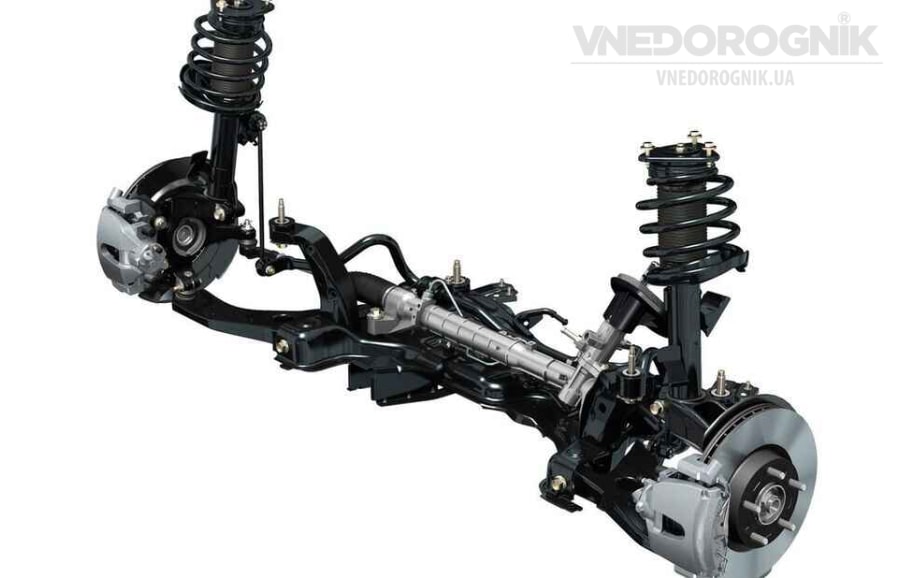
Найпоширеніший тип передньої підвіски, де амортизаційна стійка виконує роль і демпфера, і направляючого елемента.
Переваги: Компактність, низька вага та простота обслуговування.
Застосування: Більшість сучасних легкових автомобілів та кросоверів.
5. Багатоважільна (Multi-link)
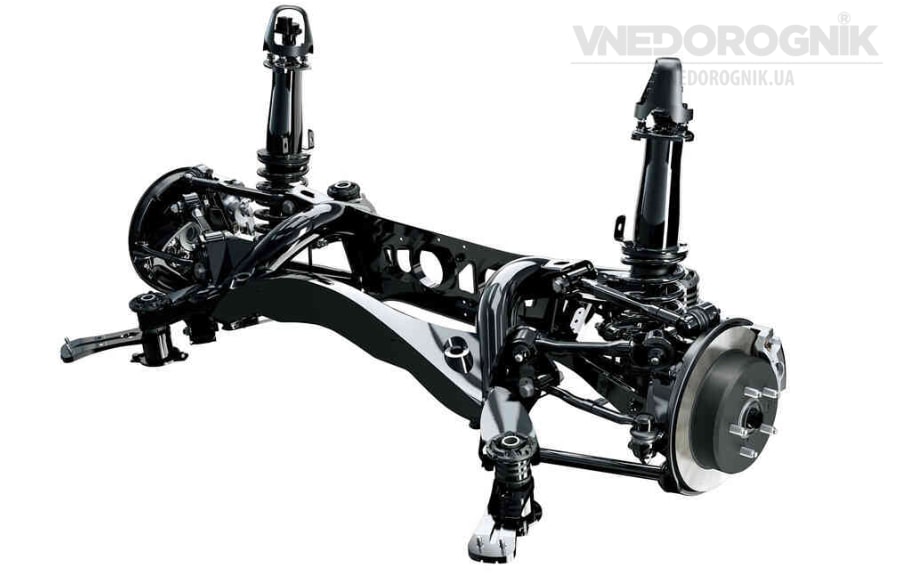
Складна конструкция з декількох важелів, що дозволяє колесу залишатися перпендикулярним до дороги за будь-яких умов.
Переваги: Еталонна керованість, відмінне зчеплення та високий комфорт.
Застосування: Авто преміум-класу та сучасні SUV.
6. Пневматична підвіска
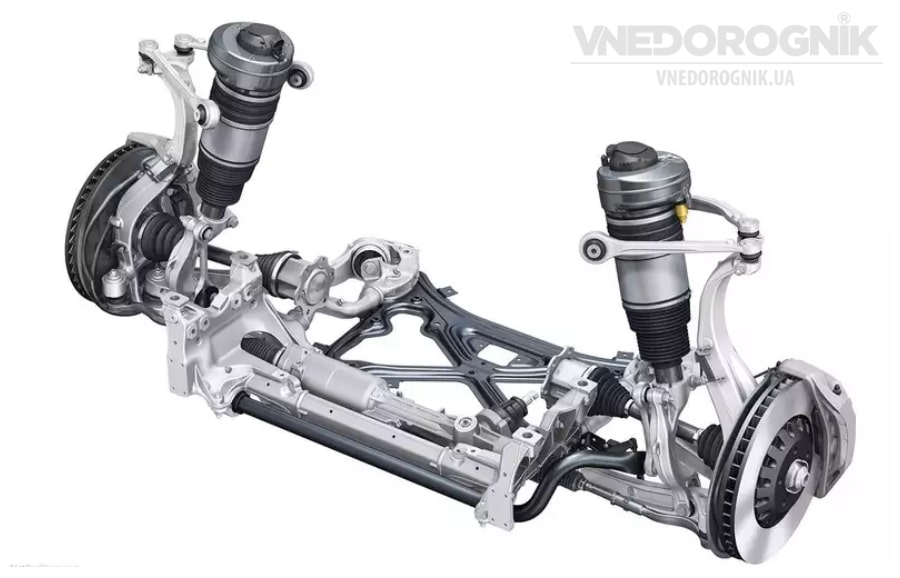
Замість металевих пружин використовуються балони зі стисненим повітрям.
Переваги: Можливість змінювати кліренс натисканням кнопки та ідеальна плавність ходу.
Застосування: Люксові позашляховики та магістральні тягачі.
Тюнінг підвіски: коли потрібен ліфт-комплект?
Штатна підвіска розрахована на асфальт та легкі нерівності. Якщо ви плануєте встановлювати силове обважування (бампери, лебідку) або великі колеса Mud Terrain, заводських компонентів не вистачить.
Встановлення посиленої підвіски (ліфт-комплекту) забезпечує:
- Збільшення дорожнього просвіту (кліренсу) на 2–4 дюйми.
- Компенсацію додаткової ваги тюнінг-аксесуарів.
- Високу енергоємність для подолання важкого бездоріжжя без «пробоїв».
FAQ: Часті питання
- Що краще: ресори чи пружини? Ресори краще для вантажів, пружини — для комфорту та артикуляції на оффроуді.
- Як зрозуміти, що час міняти амортизатори? Якщо ви помітили розгойдування кузова, «кльовки» при гальмуванні або сліди масла на корпусі стійки.
- Що таке артикуляція підвіски? Це здатність осей скручуватися один відносно одного, щоб усі колеса зберігали контакт із землею на складному рельєфі.
Експерти Vnedorognik.ua нагадують: справна підвіска — це ваша безпека. Регулярно перевіряйте стан сайлентблоків та амортизаторів, щоб уникнути дорогих ремонтів у майбутньому! Звертайтеся до наших консультантів для підбору ідеального сетапу під ваш стиль їзди, замовляйте швидку доставку по Україні або забирайте товар самовивозом у Вінниці.


 472
472
 5хв
5хв 


