


 VNEDOROGNIK БЛОГ
 My blog
 Event Calendar
 Gallery
 Tuning Atelier
 Articles
 Videos
 B2B
B2B
 SALES
SALES
 Manufacturers
 Delivery
 Payment
 Return of goods
 Catalogs
 Reviews
 ABOUT US
 Contacts
 Dealers
 Installation and maintenance


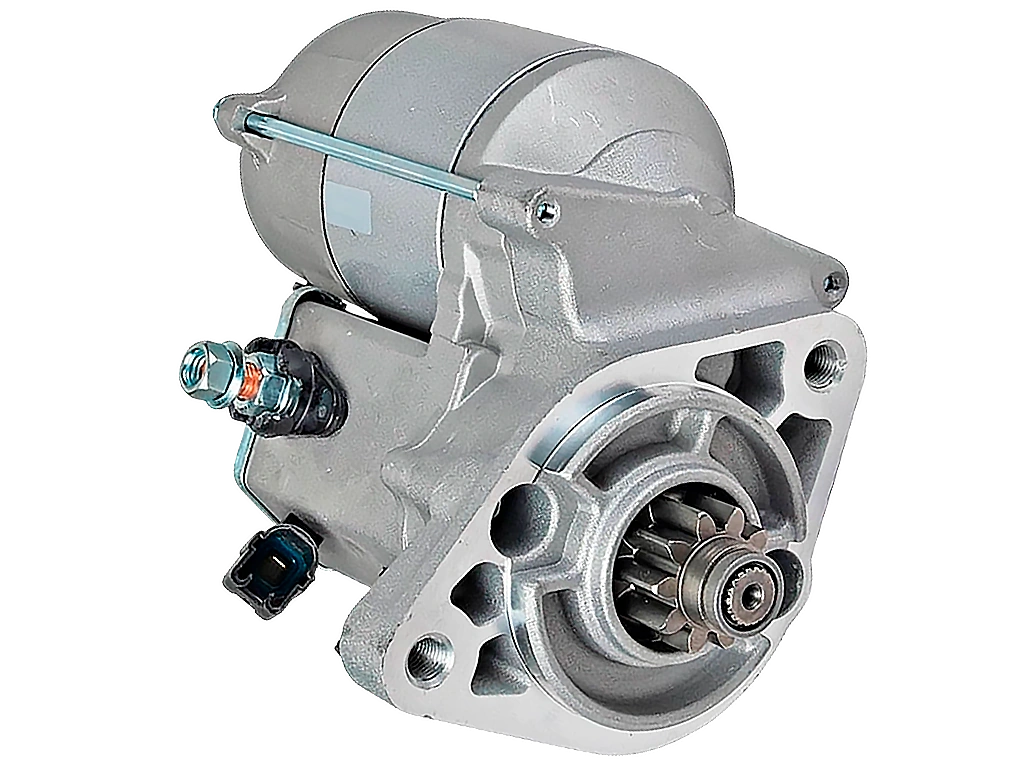
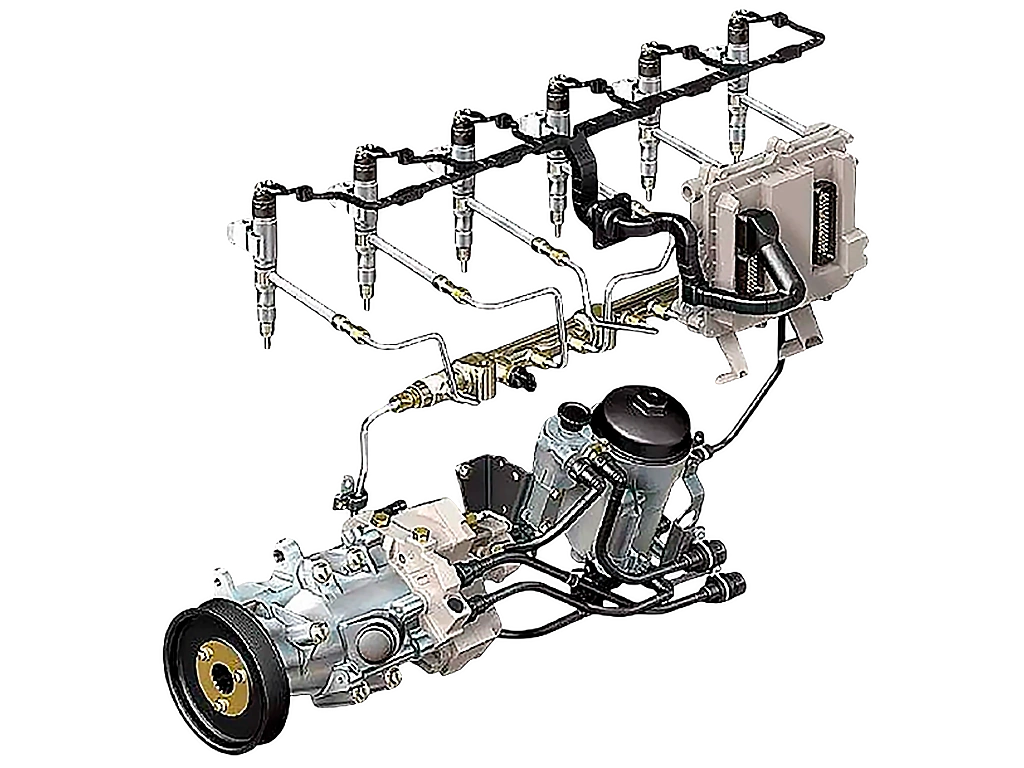
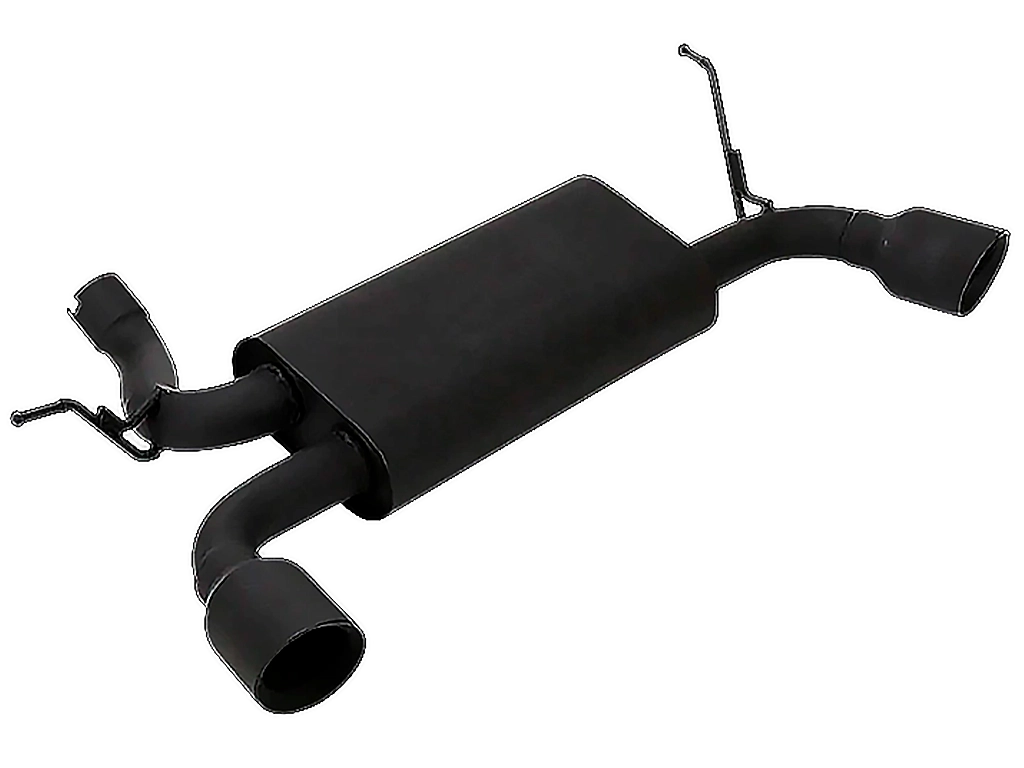
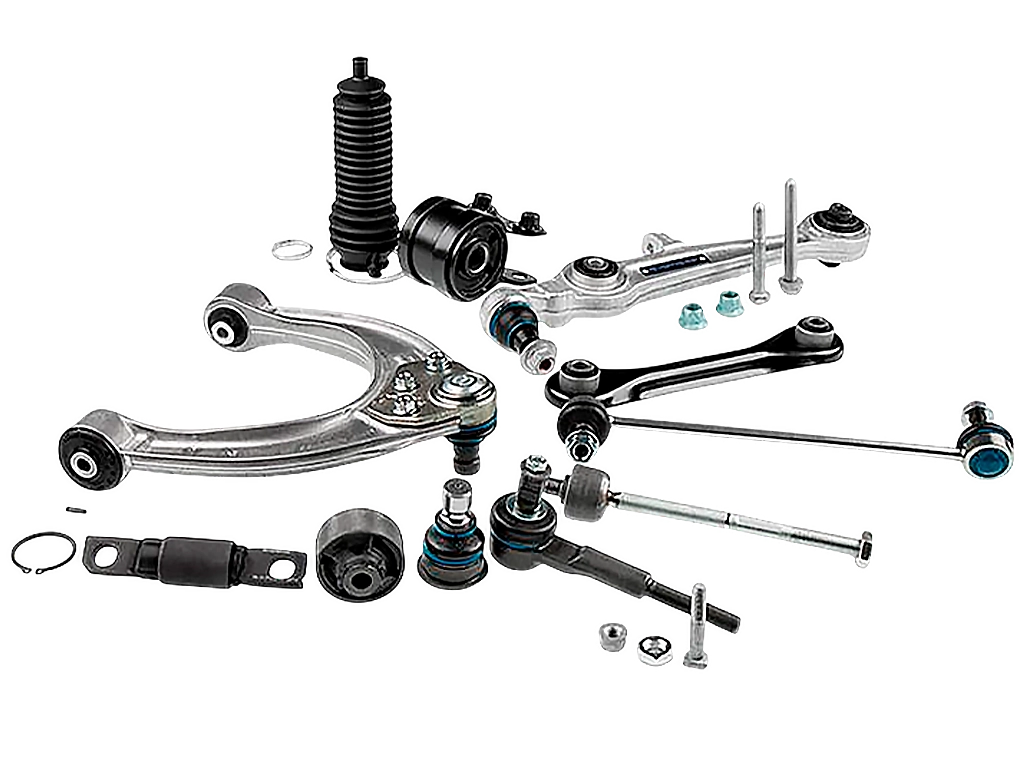













Any auto engineer begins to build a car from choosing an engine. These units not only drive the car, but also determine the quality of the trip. In the course of decades, manufacturers have invented different types of car engines to bring innovation and efficiency in seemingly long -invented mechanism as the engine.
the evolution of car engines went hand in hand with the evolution of new models and types of car
Some people prefer more power, while others take care of fuel economy. In order to meet the needs of all types of customers, car manufacturers have developed a number of different types of engines over the last few decades. Today, to expand your knowledge of engines, we will talk about each of the existing types of car motor and show the best of the other. Contents:
?
How many types of car engines exist?

The technology of car engineers went a long way since their appearance in 1885. They went beyond a simple steam engine and turned into a more complex and intricate engineering work.
However, all the options you see belong to the following categories:
- internal combustion engines
- Electric power plant
- Hybrid installations
These three categories gave rise to various designs and embodiment. Constant races for the production of more efficient force units and compliance with environmental standards have made them better. Although modern engines are similar to those that were decades ago, they differ in technology and efficiency. The new norms have strengthened the requirements for manufacturers, which inevitably led to the emergence of more efficient models capable of obtaining more power from each gram of fuel.
?-
?

This power unit is the most common of the today. He began his life as a single -cylinder two -stroke motor in the 19th century and evolved into different configurations. Manufacturers continue to improve this engine type to increase power and efficiency to compete with hybrid and electrical installations.
ICE produces energy by combing fuel in a controlled chamber . The power is then transmitted to the wheels through the transmission. In short, you can describe the work of any gasoline or diesel engine.
Among the three types of car engines listed above is the only type that uses exclusively fossil fuel - oil. It can be gasoline, gas or diesel, depending on the type of combustion. This leads us to two main types of internal combustion engines.
Types of internal combustion engines
- engines with spark ignition
- Motors with compression ignition
Inspection System
Roaring sound that you often hear in supercar is derived from these engines, albeit with some modifications. They are equipped with most cars with internal combustion units.
This type of engine has cylinders or combustion chambers in which the air is reaction. Injectors (or carburetor in old motor motors) are fuel into the chamber, and the inlet valves allow you to mix with the fuel.
Then the ignition candle set fire to the mixture, causing its burning. As a result of this reaction, a huge energy is released, which pushes the piston in the chamber down. This action rotates the flywheel through the connection with the crankshaft and then the torque goes to the wheels.

At this point, we should list the components for clarity and mild difference from other types of car engines. The components are as follows:
- cylinders : these chambers are burning fuel process
- Inlet valves : let air into combustion chamber
- injectors or carburetors : inject metered fuel into the camera
- spark plugs : light fuel -air mixture
- exhaust valves : remove the burned mixture
- Pistons : Transfer the energy down to the knee shaft
- crankshaft : transforms the vertical motion of pistons into a circular motion.
- flywheel : transports energy from the engine and connects to the transmission.
The main component of the ignition system is ignition candle . Without it there will be no energy combustion and production.
These power units use lighter oil form - gasoline, to create the required power. As a result, they burn out and require more frequent refueling. Now let's see how things are doing with a diesel analogue.

This type is similar to a motor that uses spark ignition. It uses combustion chamber and all other components, but there are no spark plugs.
the process of burning fuel here is due to the combination of heat, air and pressure. As soon as the pressure from the piston reaches a given value, there is a fire of the fuel mixture.

light petroleum products such as gasoline cannot burn under pressure. Therefore, heavier products are used in compression ignition engines, the most popular is diesel. The rest of the combustion process to the transmission to act remains unchanged. However, the use of diesel fuel has some advantages.
diesel - heavier fuel, and burns much slower than gasoline . Therefore, the refueling frequency is lower than that of spark ignition. In addition, diesel units produce more power for each gram of fuel than gasoline solutions. Therefore, they are used in trucks and vehicles of high load capacity.
Compression and spark options are one of the most common types of car engines that can be found on the roads. However, the new rules are gradually removing them from use - more about it a little later.

internal combustion units have different configurations depending on the manufacturer developed. Each configuration based on the location of the cylinders has unique advantages and limitations.
Internal combustion configurations :

This configuration is the simplest of all. The simplicity and ease of assembly make it a design for manufacturers of car engines of the type of combustion.
cylinders are located in a straight line and are often called "straight engines". They can be arranged in parallel or perpendicular to the car, depending on the layout. In any case, their compactness gives them an advantage over other configurations.
Such engines are distributed in initial level cars, including hatchbacks and sedans. They consume less fuel and often have the lowest power, along with other types of car engines. However, additional devices as turbochargers can equalize their performance compared to the following configurations.
V-shaped engines

In this configuration, the cylinders form a V-shaped shape with an equal number of cylinders on both sides of the shape. They are powerful and are present in almost all high -performance cars. V-shaped engines have some advantages over direct options.
manufacturers can add more cylinders while maintaining a compact size. They can still get incredible power, even with their small size.
despite this, V-shaped engines carry more vibrations than other types of car engines.But this did not prevent them from becoming a source of energy for sports cars and hypercars and daily to delight millions of car fans on each continent.
W-shaped engines

The W-shaped engine first appeared in 1909, when the Anzani Tricocontour engine was used to drive Blériot XI Aeroplane to cross the La Tun. However, the first commercial use of this engine in the automotive industry was carried out by Volkswagen. There are three different W-shaped configurations (or double V-shaped) motor:
- the first configuration consists of three blocks of cylinders having a common crankshaft. Due to the similarity with the British brand Broad Arrow, it is also known as the Broad Arrow configuration.
- Second the configuration consists of four blocks of cylinders having a common crankshaft. This engine is also known as "Double-V".
- the third and the last configuration is an engine with two blocks of cylinders and two crankshafts.
W-shaped engines are mainly used in Volkswagen cars. Bugatti Veyron is the most famous example of a car with the engine of this configuration ( w16 ).
Flat Head)
 )
Flat configuration is the last and not very common type of internal combustion engine. In this design, the cylinders are located horizontally on either side of the crankshaft.
Flat engines have a low gravity center, which significantly improves handling. However, they are more expensive and more difficult in production. Only a few car brands still produce them, including Subaru and Porsche - making the best opposing motors that make a special and unique sound.

Today the ICE has such restrictions :
- emissions
Despite the giant successes in their development, internal combustion engines are not devoid of harmful emissions. Due to global warming, which occupies most of the climate debate, their use is gradually reduced. Most advanced countries plan to gradually abandon these power units by 2050.
Ideally, internal combustion engines should produce CO2 and water after combustion. Often this is not the case, which leads to the formation of CO - toxic gas in the Earth's atmosphere.
- High operating costs
internal combustion engines require regular maintenance to maintain them in working order. Often, drivers should change the oil to prevent breakdowns. And the cost of maintenance with increased emission standards, and subsequently increasing the complexity of the engines, can quickly become significant and persuade buyers to alternatives of ICE.
- Electric motors

inverter : This component converts a direct current from batteries to a variable for drive. It is only necessary if the engines operate from the AC network.
Battery : In conventional car engines, a mixture of fuel and air is used to obtain the required power. In electric vehicles, battery -driven energy for engines. Electric motors are a distinctive feature of most environmentally friendly cars due to the lack of harmful emissions.
- hybrid engines

One can say for sure whether you read this article from a mobile or laptop - your device's battery will discharge if you do not charge it. The same thing is inevitable with electric motors.
To solve this problem, manufacturers have come up with a way to charge batteries while driving. This has led to a hybrid engine - a combination of internal combustion engine and electric engine (more often than others) .
In addition to the combination of the best properties of batteries and internal combustion engines, hybrid structures have a number of advantages . One of them is reducing emissions of harmful substances compared to internal combustion engines. Another advantage is the instantaneous sense of increasing torque, which is given by electric motors. Despite the development of technology, internal combustion engines lag behind in the first seconds of acceleration.
Manufacturers of many supercars now use hybrid engines to get instantaneous torque and maintain the power of internal combustion engines.
The hybrid power plant has a unique place among different types of car engines. The main driving factor can be both internal combustion engine and electric motors.
therefore, hybrid engines have different configurations. In urban cars, electric motors are used as the main moving element, and in sports cars the main "force of movement" is ICE.
future car engines

The current trend shows that electricity will exceed and eventually replace other types of car engines. It demonstrated huge potential for the development of the transport sector.
to numerous preferences of electric motors belong to:
- Reduction or absence of emissions.
- minimal noise impact.
- Reduced dependence on oil and petroleum products.
- Hibidity of the construction of a car.
Despite numerous advantages, electric motors are not devoid of restrictions. The cost of rechargeable batteries is increasing and fears are concerned about mineral production.
In addition, battery production contaminates the environment more than internal combustion engines. But future technological developments will probably make the battery production and production more environmentally friendly and increase their efficiency, leaving behind the current development of ICE.
What?
cars have gone a long way of development, and one of the main directions is the development of new types of car engines.
innovations are ongoing, and so far internal combustion engines are still the most long -time and most common in the world. And although in advanced countries they begin to abandon, in the third world, the ICE will be used for a long time.
In the future, we will observe innovations in all three configurations of car engines. Regardless of whether we have more electric vehicles or other types of motors, any new development will be based on emissions and efficiency.
see you in the future!

internal combustion units have different configurations depending on the manufacturer developed. Each configuration based on the location of the cylinders has unique advantages and limitations.
Internal combustion configurations :
This configuration is the simplest of all. The simplicity and ease of assembly make it a design for manufacturers of car engines of the type of combustion.
cylinders are located in a straight line and are often called "straight engines". They can be arranged in parallel or perpendicular to the car, depending on the layout. In any case, their compactness gives them an advantage over other configurations.
Such engines are distributed in initial level cars, including hatchbacks and sedans. They consume less fuel and often have the lowest power, along with other types of car engines. However, additional devices as turbochargers can equalize their performance compared to the following configurations.
V-shaped engines
In this configuration, the cylinders form a V-shaped shape with an equal number of cylinders on both sides of the shape. They are powerful and are present in almost all high -performance cars. V-shaped engines have some advantages over direct options.
manufacturers can add more cylinders while maintaining a compact size. They can still get incredible power, even with their small size.
despite this, V-shaped engines carry more vibrations than other types of car engines.But this did not prevent them from becoming a source of energy for sports cars and hypercars and daily to delight millions of car fans on each continent.
W-shaped engines
W-shaped engine first appeared in 1909, when the Anzani Tricocontour engine was used to drive Blériot XI Aeroplane to cross the La Tun. However, the first commercial use of this engine in the automotive industry was carried out by Volkswagen. There are three different W-shaped configurations (or double V-shaped) motor:
- the first configuration consists of three blocks of cylinders having a common crankshaft. Due to the similarity with the British brand Broad Arrow, it is also known as the Broad Arrow configuration.
- Second the configuration consists of four blocks of cylinders having a common crankshaft. This engine is also known as "Double-V".
- the third and the last configuration is an engine with two blocks of cylinders and two crankshafts.
W-shaped engines are mainly used in Volkswagen cars. Bugatti Veyron is the most famous example of a car with the engine of this configuration ( w16 ).
Flat configuration is the last and not very common type of internal combustion engine. In this design, the cylinders are located horizontally on either side of the crankshaft.
Flat engines have a low gravity center, which significantly improves handling. However, they are more expensive and more difficult in production. Only a few car brands still produce them, including Subaru and Porsche - making the best opposing motors that make a special and unique sound.
- emissions
Despite the giant successes in their development, internal combustion engines are not devoid of harmful emissions. Due to global warming, which occupies most of the climate debate, their use is gradually reduced. Most advanced countries plan to gradually abandon these power units by 2050.
Ideally, internal combustion engines should produce CO2 and water after combustion. Often this is not the case, which leads to the formation of CO - toxic gas in the Earth's atmosphere.
- High operating costs
internal combustion engines require regular maintenance to maintain them in working order. Often, drivers should change the oil to prevent breakdowns. And the cost of maintenance with increased emission standards, and subsequently increasing the complexity of the engines, can quickly become significant and persuade buyers to alternatives of ICE.
- Electric motors
inverter : This component converts a direct current from batteries to a variable for drive. It is only necessary if the engines operate from the AC network.
Battery : In conventional car engines, a mixture of fuel and air is used to obtain the required power. In electric vehicles, battery -driven energy for engines. Electric motors are a distinctive feature of most environmentally friendly cars due to the lack of harmful emissions.
- hybrid engines
One can say for sure whether you read this article from a mobile or laptop - your device's battery will discharge if you do not charge it. The same thing is inevitable with electric motors.
To solve this problem, manufacturers have come up with a way to charge batteries while driving. This has led to a hybrid engine - a combination of internal combustion engine and electric engine (more often than others) .
In addition to the combination of the best properties of batteries and internal combustion engines, hybrid structures have a number of advantages . One of them is reducing emissions of harmful substances compared to internal combustion engines. Another advantage is the instantaneous sense of increasing torque, which is given by electric motors. Despite the development of technology, internal combustion engines lag behind in the first seconds of acceleration.
Manufacturers of many supercars now use hybrid engines to get instantaneous torque and maintain the power of internal combustion engines.
Thehybrid power plant has a unique place among different types of car engines. The main driving factor can be both internal combustion engine and electric motors.
therefore, hybrid engines have different configurations. In urban cars, electric motors are used as the main moving element, and in sports cars the main "force of movement" is ICE.
future car engines
The current trend shows that electricity will exceed and eventually replace other types of car engines. It demonstrated huge potential for the development of the transport sector.
to numerous preferences of electric motors belong to:
- Reduction or absence of emissions.
- minimal noise impact.
- Reduced dependence on oil and petroleum products.
- Hibidity of the construction of a car.
Despite numerous advantages, electric motors are not devoid of restrictions. The cost of rechargeable batteries is increasing and fears are concerned about mineral production.
In addition, battery production contaminates the environment more than internal combustion engines. But future technological developments will probably make the battery production and production more environmentally friendly and increase their efficiency, leaving behind the current development of ICE.
What?
cars have gone a long way of development, and one of the main directions is the development of new types of car engines.
innovations are ongoing, and so far internal combustion engines are still the most long -time and most common in the world. And although in advanced countries they begin to abandon, in the third world, the ICE will be used for a long time.
In the future, we will observe innovations in all three configurations of car engines. Regardless of whether we have more electric vehicles or other types of motors, any new development will be based on emissions and efficiency.
see you in the future!