



 VNEDOROGNIK БЛОГ
 My blog
 Event Calendar
 Gallery
 Tuning Atelier
 Articles
 Videos
 B2B
B2B
 SALES
SALES
 Manufacturers
 Delivery
 Payment
 Return of goods
 Catalogs
 Reviews
 ABOUT US
 Contacts
 Dealers
 Installation and maintenance



















Contents:
-
?
? #333399; ">
-
? Style = "color: #333399;">
-
? The caliper?
-
? To adjust the brakes in the car?
-
? brake fluid?
Modern cars are equipped with hydraulic -driven brakes on all four wheels. The brakes can be disk or drum.
when braking, the weight of the car is transferred to the front wheels, therefore they play a larger role in stopping the car than the rear. That is why many budget cars on the front wheels have disc brakes, which are usually more effective and drums on the rear.
If we talk about expensive and highly productive cars, they will be equipped with a completely disk braking system from known brands such as Brembo or hawk . But old or more compact cars often have completely drum brake systems.
- Main Brake Cylinder : Contains a piston knot and a brace fluid.
- Brake fluid : transmits hydraulic pressure.
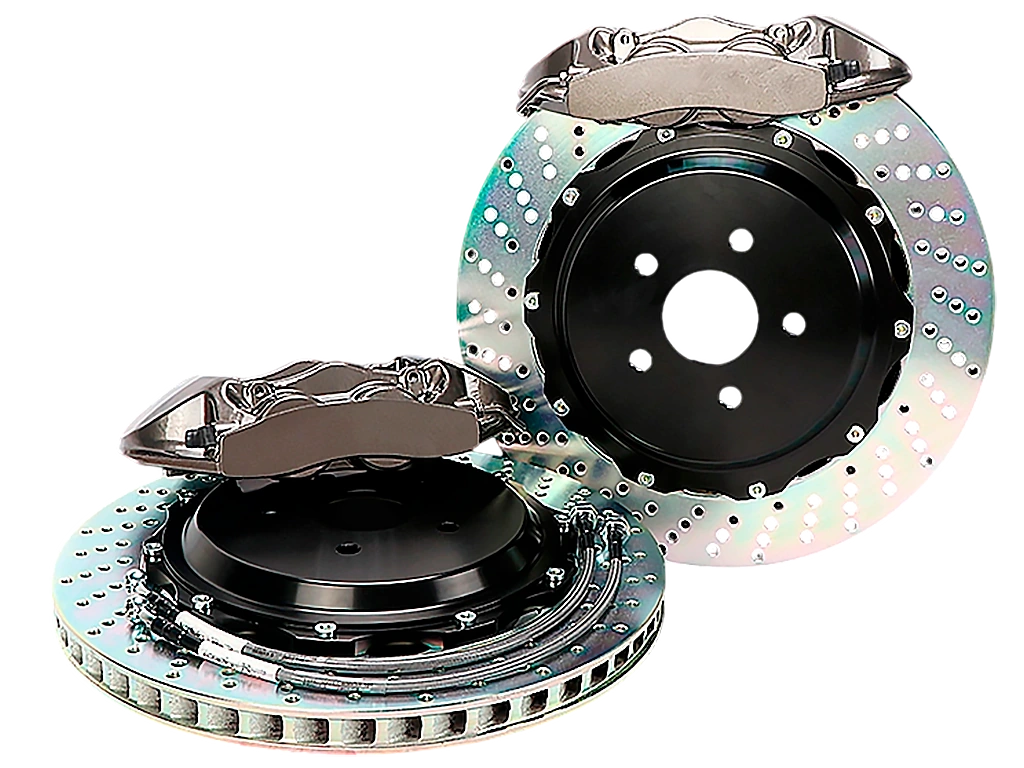
- Disc brake node : includes caliper, pads and brake disk.
- Broadgrams and hoses : transmit the brake fluid to the brake nodes.
- Drum Brake : Includes pads, wheel cylinder and drum.

Now let's take a closer look at each of the components of the system and let's look at what they consist of and how they convert lightly pressing the brake pedal into an effective and rapid slowdown of 1.5 - 2 tons of mechanism on almost any surface.
? 
rear brakes specifically designed weaker than front . This is done to prevent a dangerous skid during a sharp braking, when the rear wheels can lose weight so much that they simply block.
Most cars are now also equipped with a pressure discharge valve that closes with intensive braking. In this case, the pressure in the hydraulic system increases to the level, which can lead to blocking the rear brakes, preventing the further flow of fluid to them.
Modern cars can have complex anti -lock brake systems (ABS) that use different methods to determine a car slowdown and block wheels. Such systems are quickly pressed and released by brakes to prevent their blocking, but perform effective braking.

Vacuum brake system

To facilitate braking, many cars are equipped with brakes with an amplifier . For this purpose, the pressure difference between partial vacuum in the intake collector and the foreign air is used.
Inlet collector is connected to a servo that provides braking. The direct action servo is between the brake pedal and the main cylinder. When you press the pedal, the piston of the main cylinder is compressed.

However, the pedal also affects the air valves, and there is a large rubber diaphragm that is connected to the piston of the main cylinder. When the brakes are switched off, a vacuum is fed on both sides of the membrane.
In addition, there is a normal mechanical communication between the pedal and the main cylinder, if the vacuum does not work, for example, when the engine is switched off, the brakes will still work . However, to turn on the brakes, much more effort to the brake pedal is required to slow down.
disk brakes

disk braking system consists of a disk that rotates while driving. It, in turn, is held by a caliper containing small hydraulic pistons, which are put into operation from the main cylinder.
to slow or stop the disk , pistons press on friction lining, which press the disk on both sides. The pads have a shape that allows them to cover a larger disk area. This is especially true of double -circuit brake systems, where several pairs of pistons are often used.

It will be enough for many general explanations, but to better find out what the interacting details are made of, let's look at the structure of the caliper and brake discs.
? 
caliper is a knot fixed on a car with a bracket.It frames the brake disk (rotor), looking and functioning as a C-shaped clamp. It contains the following components:
-
?
- one or more pistons that press brake pads to the rotor during braking.
- a descent screw to maintain brakes and replace fluid.
- piston seal , which prevents braking fluid leakage and draws a piston when brake release.
- Pitch to prevent contamination from entering the cylinder.
- clamping springs of pads that give stability of pads inside the caliper.

brake discs can be solid or ventilated. ventilated disks have a larger surface area and is easier to remove heat . rubber seals around the pistons are designed so that the pistons gradually move forward as the pads are worn. Thanks to this, the tiny gap remains constant and The brakes do not require adjustment . Many of the late models of pads built in wear sensors . When the pads are almost worn, the wires of the sensor are exposed and locked on a metal disk, resulting in a warning light on the panel. the drum brake consists of a hollow drum that rotates while driving. Inside are two pads with friction overlays that slow down the wheels.
Some drums have two leading shoes, each with their hydraulic cylinder. Others have one conductive and one driven pads with a point of rotation in the front. The second design variant uses one cylinder with a piston at each end to move two pads. Usually, such brakes are only used for rear wheels and are simpler and less powerful than a two -pad system. to reduce the stroke of the pads , a regulator is used. In old models, he was manual and demanded a periodic turn as the friction lining was worn. In new regulation cars, it is automatically (with a wicket). drum brakes can be extinguished by repeated application for a short period of time. They heat up and lose their efficiency until they cool. Disc brakes are much less prone to attenuation because of their more open structure. To use a hand brake, you need to pull the lever that is connected to the brakes by a number of small levers, pulleys and guides. When the hand brake is tightened, the hostile on the lever holds the brake in place. To release the lever, you need to press the button on the lever. But not all cars are the same, so the parts may differ, especially for modern machines. in most new cars, hand brakes and are completely built into the main system , reducing the number of spare parts in the braking system. it is recommended to change the brake fluid periodically because it loses its technical properties 
Do brakes in the car?


 Usually a mechanical hand brake acts on the rear wheels and performs a parking brake. If the hydraulic system refuses, a manual brake can provide limited braking .
 When to change the brake fluid?

All manufacturers recommend changing the brake fluid no less than every two years . However, the frequency of replacement may vary depending on the driving style, liquid quality and pavement. In order not to worry about how much to change the brake fluid, it is enough to periodically check the condition of the fluid for its loss and changes in the external state.
- If the color of the liquid is different from the factory or a boiling point of less than 170 degrees, then a replacement is required.
- With a long simple machine for more than two years, it is also recommended to replace the brake fluid.